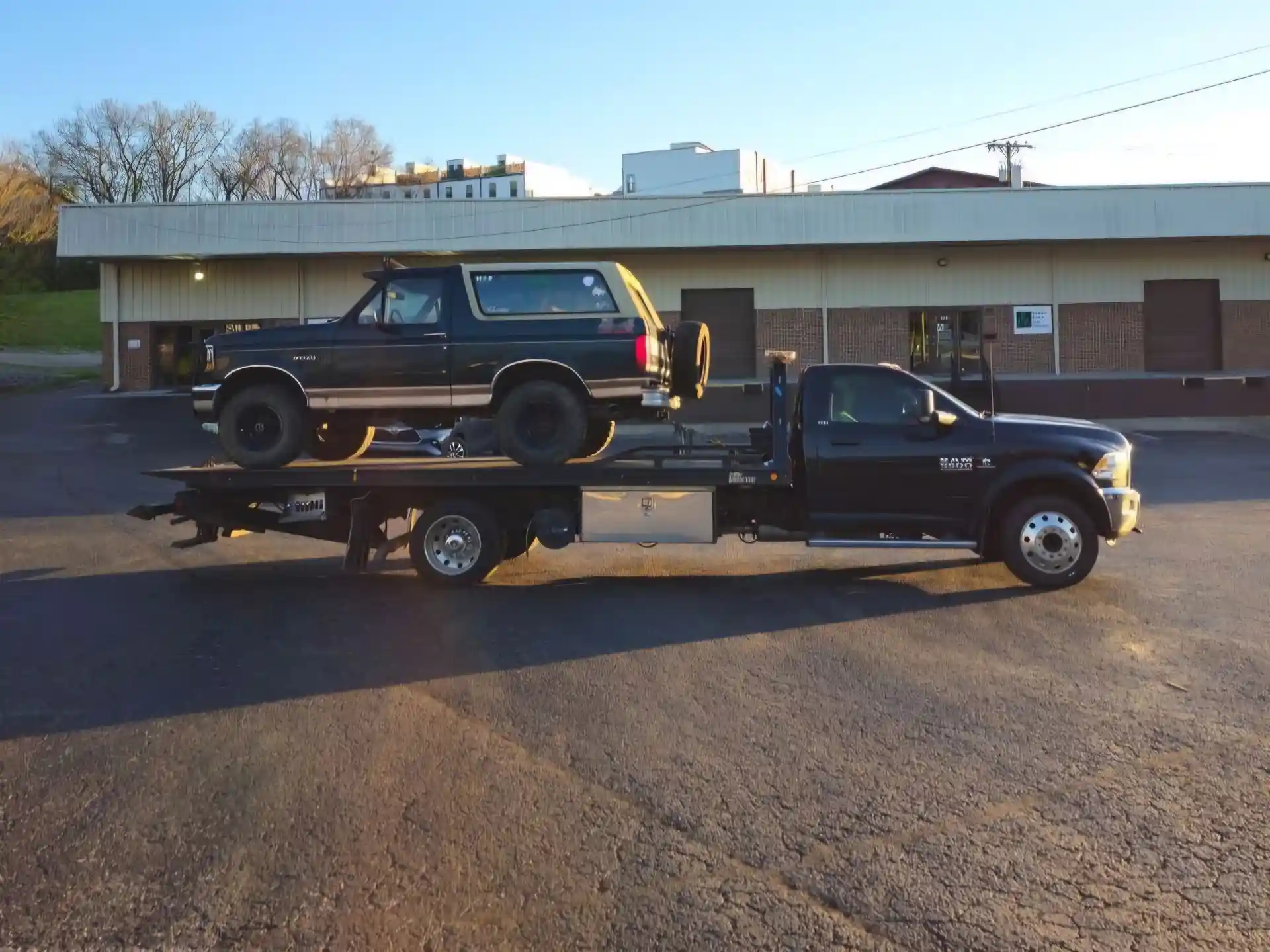
Page image supporting Why Your Car Overheats in Nashville Summer Heat. Learn why Nashville summers are brutal on engines and how to prevent car overheatin…
Why Nashville Summer Heat Cooks Your Engine
Learn why Nashville summers are brutal on engines and how to prevent car overheating from a veteran driver who sees it all on I-40 and Briley Parkway.
I was sitting on the shoulder of I-40 East near the 216-B exit last Tuesday, right where the traffic starts to bunch up heading toward the airport. The temperature gauge on my flatbed was reading 97 degrees, but the asphalt was radiating heat that felt closer to 120. About fifty yards ahead, a late-model SUV was venting a massive cloud of white steam from under the hood. The driver was standing on the grass, looking defeated. This is the reality of Nashville in July. When the humidity hits 80% and the sun beats down on the concrete of the downtown loop, your car's cooling system isn't just working; it is fighting for its life.
After ten years of hooking up cars in Davidson County, I can tell you that car overheating in Nashville isn't usually about one big part breaking. It’s usually a combination of our specific geography, the stop-and-go misery of the afternoon commute, and a cooling system that was already on the edge. If you are sitting on West End or crawling down Nolensville Pike at 5:00 PM, your engine is generating massive amounts of heat with almost no airflow to dissipate it. That is when the weak links in your cooling system finally give up.
The Nashville Heat Sink Effect
Nashville has a unique way of killing radiators. We live in a bowl, and the heat gets trapped here. But the real killer is the surface temperature of our roads. If you’ve ever driven the stretch of I-24 through Antioch during rush hour, you know that traffic can come to a dead halt for thirty minutes at a time.
In a moving car, air is forced through the radiator fins, helping the coolant drop its temperature before it heads back into the engine block. When you are stuck behind a line of cars near the Titans stadium, that airflow stops. Your car relies entirely on its electric cooling fans. If those fans are even slightly worn out, or if your radiator fins are clogged with Tennessee road grime and bugs, the heat stays trapped. Your coolant temperature starts climbing, and before you know it, the pressure builds up enough to blow a hose or crack a plastic radiator tank.
Common Culprits Behind the Steam
When I pull up to a stranded motorist, I usually check a few things before I even winch them onto the bed. It helps me give the customer a better idea of what they’re facing at the shop. Here are the most common reasons I see for car overheating in Nashville during the summer months.
1. Low Coolant and Slow Leaks
Most people don't check their coolant until the light comes on. By then, it might be too late. Nashville’s temperature swings—from freezing winters to 100-degree summers—cause rubber hoses to expand and contract. Over time, they get brittle. You might have a pinhole leak that only sprays when the system is under high pressure. If you notice a sweet, maple syrup smell after you park at the grocery store, you’ve got a coolant leak. Don't ignore it.
2. The Failed Thermostat
This is a small part, but it’s the gatekeeper for your engine. It stays closed when the engine is cold to help it warm up, then opens to let coolant flow to the radiator. If it sticks shut on a hot day while you're navigating the hills of Bellevue, your engine will overheat in minutes. The needle will go from normal to the red zone faster than you can find a safe place to pull over.
3. Cooling Fan Issues
As I mentioned, these are vital for city driving. If you’re cruising down Briley Parkway at 65 MPH, you don't really need the fan. But the second you hit that construction bottleneck, the fan has to kick in. I’ve seen many cars where the fan motor has burnt out, and the owner didn't realize it until they were stuck in Broadway traffic and the hood started smoking.
Why Modern Cars Are More Vulnerable
You might think an older car would be more likely to overheat, but modern vehicles have their own set of problems. To save weight and improve gas mileage, manufacturers use a lot of plastic in the cooling system. Radiator tanks, thermostat housings, and even some water pump impellers are made of plastic or composite materials.
Under the extreme heat of a Middle Tennessee summer, these plastic parts become brittle. A plastic radiator side tank can develop a hairline crack that you can't even see until the car is at full operating temperature. Once that crack opens up, you lose pressure, the boiling point of your coolant drops, and the engine overheats instantly. This is why roadside assistance calls spike the moment we hit our first 90-degree week in June.
The Operator's Secret: Pressure is Everything
Here is a detail most people don't realize: the radiator cap is one of the most important parts of the system. It’s not just a lid; it’s a pressure relief valve. By keeping the cooling system under pressure, it actually raises the boiling point of the coolant. If the seal on that cap is worn out, the coolant will boil at a lower temperature, creating air pockets in the engine. Air doesn't pull heat away from metal like liquid does. If you have air pockets, you have hot spots, and that’s how you warp a cylinder head or blow a head gasket.
What to Do When the Needle Climbs
If you see that temperature gauge moving past the middle point, or if a warning light pops up, you have to act fast. Here is what I tell my friends and family when they’re driving in Nashville heat:
- Turn off the A/C immediately. I know it’s 95 degrees out, but the air conditioner puts a massive load on the engine and generates its own heat right in front of the radiator.
- Turn on the heater. This sounds miserable, but the heater core is basically a second, smaller radiator. Turning the heat to full blast pulls heat away from the engine and vents it into the cabin. Open your windows and suffer for a few minutes to save your engine.
- Pull over safely. Don't try to "make it home." If you are on I-65, get to the shoulder or take the nearest exit.
- Do NOT open the radiator cap. I cannot stress this enough. That system is under immense pressure. If you open that cap while it's hot, you are going to get sprayed with boiling liquid. I’ve seen some nasty burns out on the road. Let it sit for at least 45 minutes before even touching the cap.
Preventing the Summer Breakdown
You don't want to meet me on the side of the road because your engine melted. Overheating prevention is mostly about basic maintenance that people skip because they’re busy.
- Flush your coolant: Most manufacturers recommend this every 30,000 to 50,000 miles. Old coolant becomes acidic and can eat away at your gaskets from the inside out.
- Inspect your belts: The belt drives your water pump. If that belt is cracked or glazed, it could slip or snap. No belt means no water pump, and no water pump means an engine death sentence.
- Keep it clean: If you’ve been driving through muddy areas or construction zones in North Nashville, check your radiator for debris. Use a low-pressure garden hose to wash out the fins from the back side if possible.
When the Damage is Done
Sometimes, despite your best efforts, the heat wins. If you find yourself stranded on the side of Charlotte Pike with a car that won't start or is pouring out blue-ish smoke, it’s time to call for a professional tow. Continuing to drive an overheating car is the fastest way to turn a $200 repair into a $5,000 engine replacement.
When we arrive, we don't just hook the car and go. We make sure you’re in a safe spot and check to see if the car is even safe to winch. If your engine has overheated to the point of seizing, we have to use specific techniques to ensure we don't damage your transmission or drivetrain during the tow. If you're in a bind, you can reach us at (615) 756-5330. We know these roads, and we know how the heat treats vehicles here.
The Real Cost of Overheating
I’ve towed everything from beat-up work trucks in Madison to high-end luxury cars in Green Hills. The heat doesn't care how much you paid for your car. In fact, some of those high-performance German engines have even tighter tolerances and less room for error when it comes to cooling.
A tow might feel like an inconvenience, but compared to the cost of a warped head or a cracked block, it’s a bargain. Nashville summers aren't getting any cooler, and our traffic isn't getting any lighter. Taking twenty minutes to check your fluid levels today could save you three hours of sitting on a hot guardrail tomorrow.
Keep an eye on that gauge, stay hydrated, and remember that your car is working twice as hard as you are when the sun is out. If the steam starts rolling, get off the road and give us a call. We'll get you and your car out of the sun and to a shop that can get you back on the road.
Stay cool out there on the bypass.
Stranded or Stuck? We're Ready.
Our dispatchers are standing by around the clock — one call and a truck is on the way