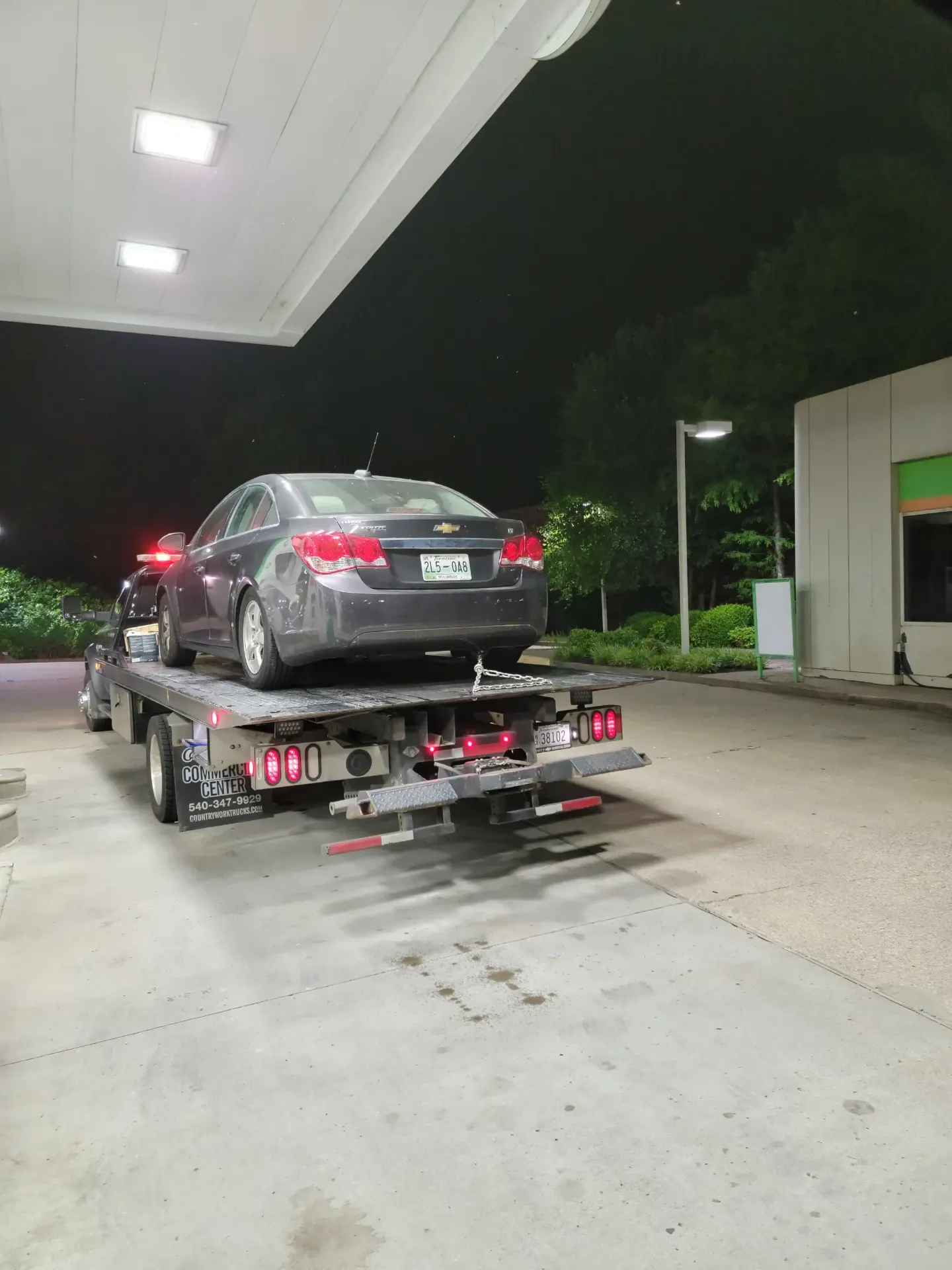
Page image supporting Wrong Fuel in Your Car? What to Do Before Moving It. Put the wrong fuel in your car in Nashville? Learn what to do before starting,…
What Nashville Drivers Should Do After Putting in the Wrong Fuel
Put the wrong fuel in your car in Nashville? Learn what to do before starting, at the pump, or while driving, plus what to tell a tow dispatcher.
If you realize you added the wrong fuel, stop fueling and do not start or restart the engine. If you are already driving, reach a safe stopping place before shutting the engine off. Do not add more fuel to try to dilute the mistake.
What happens next depends on whether the engine has run. Tell station staff what happened, keep the vehicle off, and arrange professional guidance rather than starting it just to clear the pump.
Situation 1: You have not started the engine
Leave the engine off. Do not turn on the ignition to check the fuel gauge, test whether the car will run, or prepare to move it. On some vehicles, switching the ignition on can activate the fuel pump even without starting the engine.
Take these steps while the vehicle stays parked:
- Stop dispensing fuel and return the nozzle to its holder if it is safe to do so.
- Check the pump label and receipt to identify what you selected. Do not rely on nozzle color; colors are not a dependable way to identify fuel across stations.
- Confirm the vehicle's fuel requirement using the fuel-door label or owner's manual.
- Save the receipt or photograph the transaction details, including the approximate gallons added.
- Notify station staff that the vehicle should not be started and needs assistance.
Do not start it just to free up the pump
A line of waiting drivers can make moving the car feel urgent. Explain to staff that starting it may circulate the wrong fuel through the system. Ask them to help manage the pump area while you arrange assistance.
Do not assume you can safely push it into another space. Slopes, traffic through the station, steering locks, and electronic parking brakes can complicate a seemingly short move. Any shifting or movement should follow the manufacturer's instructions and an on-site professional's assessment.
Keeping the engine off avoids running it on the fuel you just added, but it does not establish whether the fuel stayed only in the tank or what service will be needed. Report any ignition activation accurately.
Situation 2: You started the engine at the pump
If the vehicle is still stationary, shut the engine off as soon as you recognize the mistake. Do not let it idle while you look up advice or speak with station staff.
If you have already begun pulling away, stop safely before shutting it down. Once stopped, do not restart it—even if it sounded normal or only ran briefly.
Make a note of:
- Whether the engine only idled or the vehicle moved.
- Approximately how long it ran and how far it traveled.
- Any rough running, smoke, loss of power, warning lights, or stalling.
Those details help the receiving shop assess the situation. They are not a reliable way to judge damage yourself. A normal-sounding engine does not prove it is safe to drive, and a stalled engine should not be repeatedly cranked to see whether it will recover.
If you used remote start, include that in your account. The important distinction is whether the engine ran, not whether you were sitting in the driver's seat.
Situation 3: You discover the mistake while driving
Get safely out of moving traffic before switching off the engine. Do not shut it down while rolling; doing so may affect steering or braking assistance.
Signal and move to the nearest safe stopping place you can reach. Do not continue toward home or a repair shop to avoid arranging a tow. If the car stalls, use the control you still have to reach a safer position if possible, and do not attempt to restart it.
On a busy Nashville road—or an interstate such as I-24, I-40, or I-65—traffic exposure may be the most immediate danger. Once stopped:
- Turn on your hazard lights.
- Shut the engine off if it is still running.
- Assess traffic before opening a door or getting out.
- If the vehicle is stranded in an active lane or there is immediate danger, call 911.
- Otherwise, arrange towing and provide your exact location and direction of travel.
A visible fuel leak, fire, or smoke suggesting a fire changes the priority: get away from the vehicle if you can do so safely and call emergency services. Do not remain beside it to collect fueling details.
Do not dilute the fuel, siphon it, or test-drive the car
There is no universal amount of wrong fuel that is safe for every vehicle. The fuel types, amount added, fuel already present, and vehicle design all matter.
Avoid these attempted fixes:
- Topping off with the correct fuel. Do not try to create a supposedly safe mixture without vehicle-specific professional guidance.
- DIY siphoning or draining. Fuel presents fire, exposure, storage, and disposal hazards. Removing some liquid also does not establish that the fuel system is ready to operate.
- Adding a treatment or additive. Do not treat a bottle on the station shelf as a remedy for incompatible fuel.
- Driving a short distance as a test. Running smoothly for a few minutes does not clear the vehicle for continued use.
Gasoline in a diesel vehicle, diesel in a gasoline vehicle, and E85 in a vehicle not designed for it require vehicle-specific assessment. Selecting a lower gasoline octane than intended is a different issue from adding an incompatible fuel. If that is the mistake, check the manufacturer's octane requirements and seek guidance rather than assuming the same remedy applies. If you are unsure what you dispensed, keep the engine off while you verify it.
Your pump-side handoff checklist
Gather this information for dispatch and the repair shop. If a detail is unknown, say so rather than guessing.
| Detail | What to report |
|---|---|
| Fuel selected | The product name on the pump or receipt, including grade or ethanol designation if shown |
| Vehicle fuel requirement | What the fuel-door label or owner's manual specifies |
| Approximate amount added | Gallons from the transaction, plus estimated fuel already in the tank if known |
| Ignition and engine status | Whether ignition was activated, remote start was used, or the engine ran; approximate running time and distance |
| Vehicle details | Year, make, model, and drivetrain if known |
| Exact location | Station name, street address, pump number, and which side or entrance provides access |
| Current condition | Whether it is stationary, stalled, leaking, or showing symptoms; any access restrictions |
A useful first sentence is: “The vehicle was misfueled and should not be started.” Give that information before discussing how it will be moved.
Arrange transport without assuming the engine can be used
Dispatch needs to know about misfueling because driving the vehicle onto a truck may be inappropriate. Do not start it for loading, shift it into neutral, release a parking brake, or use an override unless the procedure follows manufacturer instructions and the operator's assessment.
You can discuss transport without starting the engine, but the vehicle's design and position determine the appropriate loading and towing approach. A flatbed request alone does not resolve shifting, steering, or access constraints. Equipment availability and the loading plan must be confirmed with dispatch.
Hook Em' Up Towing in Nashville is available 24/7 at (615) 756-5330. Explain the misfueling and engine status when requesting assistance; do not assume towing includes fuel draining or repairs.
Before transport, choose a repair shop and confirm that it can accept and assess your particular vehicle after misfueling. Ask about receiving hours and after-hours drop-off instructions. Pass the fueling details to the shop and tell the arriving operator again that the engine should not be started.
Hook Em' Up Towing — Nashville's Trusted Choice
Towing and roadside assistance across Nashville, available 24/7