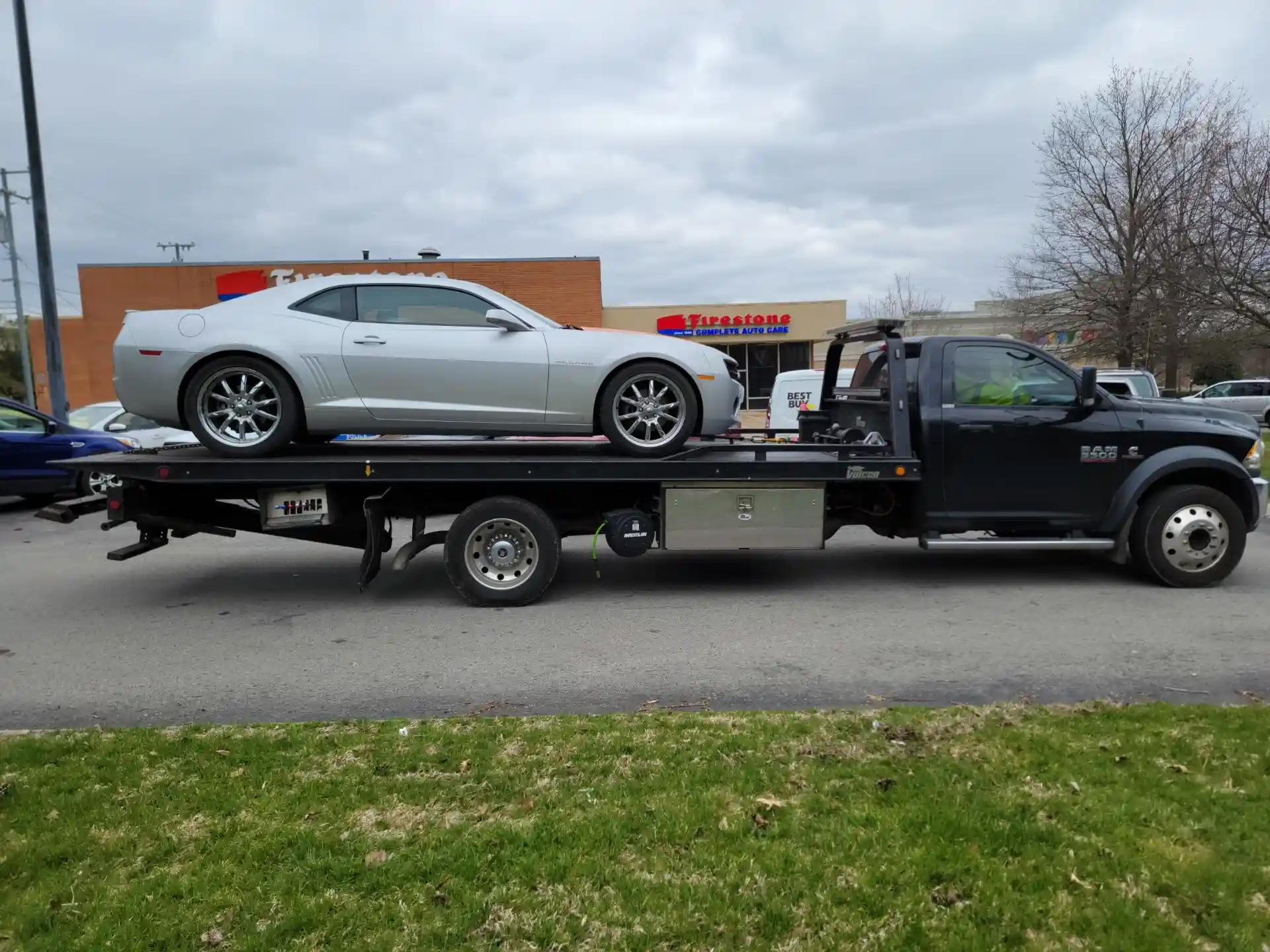
Page image supporting Surviving a Tire Blowout on I-40 Near Nashville. Practical safety steps for handling a tire blowout on I-40 near Nashville, from reg…
What to Do When a Tire Blows on I-40 Near Nashville
Practical safety steps for handling a tire blowout on I-40 near Nashville, from regaining control to calling for help.
A tire blowout is a serious safety event. When a tire fails at highway speed, how you react in the first few seconds can determine whether you reach the shoulder safely.
The Immediate Response to a Blowout
The instinct to brake hard is the wrong one. Braking can increase drag on the side of the failed tire and cause the vehicle to pivot.
- Avoid hard braking. Sudden braking can destabilize the vehicle.
- Ease off the accelerator gradually rather than stomping the brake.
- Steer straight. Grip the wheel firmly and keep the vehicle pointed in its lane until the vibration settles.
- Let the car coast down using road friction before applying the brakes gently.
Finding a Safe Spot on I-40
Shoulders along I-40 through Nashville vary in width, and some stretches offer very little room. If you can safely reach an exit ramp or a wider shoulder section, do so. If you're in a left lane and can't safely cross traffic, a wide left shoulder may be an option. If you're stopped in a travel lane, turn on your hazards and call 911.
Staying Safe on the Shoulder
Once stopped, your vehicle becomes a hazard to passing traffic.
- Stay inside the vehicle if the shoulder is narrow or on a bridge with limited clearance. Passing trucks create air turbulence that can be dangerous to someone standing close to traffic.
- Use hazard lights, and reflective triangles or flares if you can place them safely without walking near live lanes.
Why DIY Tire Changes on a Busy Interstate Are Risky
Factory jacks are designed for flat, stable surfaces, not an inclined or uneven interstate shoulder. Passing trucks can rock a vehicle enough to dislodge it from a jack. If the flat tire is on the side facing traffic, changing it yourself adds significant risk. We offer tire change service with equipment suited to roadside conditions.
What to Tell the Dispatcher
When you call (615) 756-5330 for a tire emergency, these details help:
- Direction of travel: Eastbound or westbound.
- Mile marker or landmark: A mile marker is more precise than a nearby exit name.
- Tire location: Which side of the vehicle, so the truck can be positioned safely.
- Vehicle type: Larger or specialty vehicles may require different equipment.
Vehicles That May Need a Tow Instead of a Tire Change
If the blowout caused damage beyond the tire, such as a bent wheel or suspension damage, the vehicle may need to be towed rather than repaired roadside. Some vehicles require specific steps to shift into neutral when the engine won't start — follow your owner's manual or let the tow operator check this before attempting to move the vehicle, since forcing it in the wrong state can damage the transmission.
Towing Fees and Logistics
If police arrive before a towing company and the vehicle is blocking a lane, they may call a rotation tow service. Staying with your vehicle and communicating that a private tow is on the way can sometimes allow a short window for your own service to arrive, though clearing a safety hazard takes priority.
What Not to Do After a Blowout
- Don't stand directly behind or in front of your car. Stay well clear of the lanes if possible.
- Don't try to drive on a flat to the next town. Continuing to drive can cause additional damage to the wheel, brake lines, or body panels.
- Keep your wheel lock key accessible if your vehicle has locking lug nuts, since it's needed to change the tire.
Recovery and Safety Checklist
- Keep the car straight without braking hard.
- Move to the shoulder when it's safe to do so.
- Call for help if you're not comfortable changing the tire yourself.
- Check your spare before relying on it — most temporary spares have speed and distance limits, so check your owner's manual.
If you're stuck with a stubborn lug nut or heavy traffic nearby, we can help with roadside assistance for tire and mechanical issues.
FAQ
What should I do first if a tire blows out while driving? Avoid braking hard, ease off the gas, and steer straight until the vehicle stabilizes before coasting to a stop.
Is it safe to change a tire on the I-40 shoulder myself? It's safer to call for professional help, especially on narrow shoulders or if the flat is on the traffic-facing side.
How far can I drive on a temporary spare tire? Check your owner's manual — most spares have limited speed and distance ratings.
Hook Em' Up Towing — Nashville's Trusted Choice
Towing and roadside assistance across Nashville, available 24/7