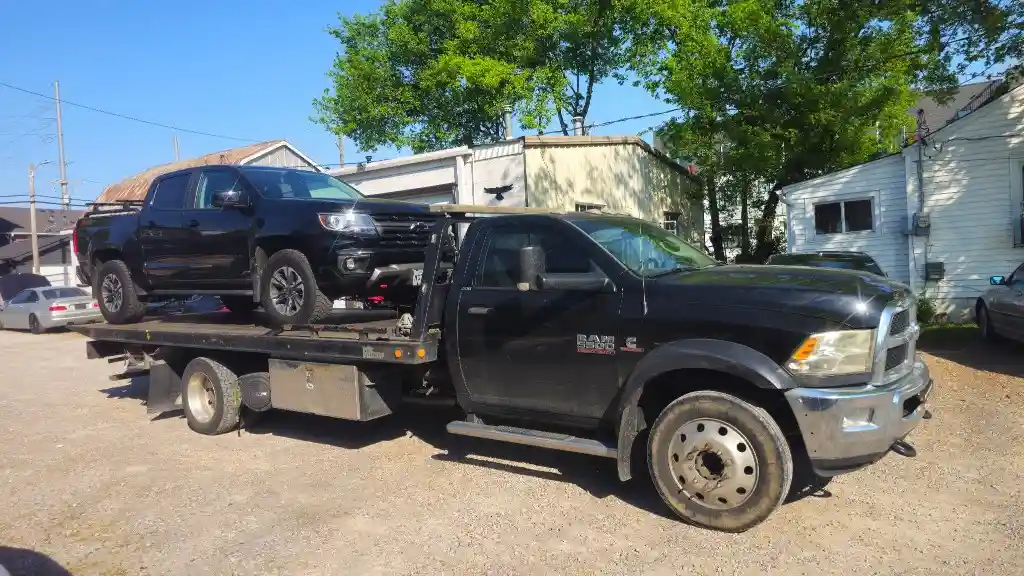
Page image supporting Flatbed vs Wheel-Lift vs Hook: Tow Truck Guide. Types of tow trucks explained — when to request flatbed, wheel-lift, or hook and cha…
Types of Tow Trucks Explained: Picking the Right One
Types of tow trucks explained — when to request flatbed, wheel-lift, or hook and chain in Nashville, and which one protects your car best.
I've been pulling cars out of tough spots in and around Nashville for more than ten years, and the most common question I get isn't about price—it's "what kind of truck are you sending?" Most folks have never had to think about it, but believe me, the type of tow truck that shows up is critical. Sending the wrong truck, especially with modern cars, is a recipe for turning a bad day into an expensive one. It can damage your transmission, your bumper, or your all-wheel-drive system.
After a decade of answering that question on the side of I-40 or in a quiet Donelson neighborhood, I wanted to lay it all out. Here’s the breakdown of every truck in our fleet at Hook Em' Up Towing and exactly when, and why, we use each one.
First: Do You Even Need a Tow?
Before we talk about trucks, let's answer the first question. Sometimes, you don't need a tow at all. You need what we call roadside assistance, which is where we fix the problem right where you are. This is always our first choice because it saves you time and money.
When You Probably Just Need Roadside Help
These are the simple, on-the-spot fixes that get you back on the road in minutes.
- Dead Battery: Your car makes a clicking sound or is completely silent. This is a simple fix. We come out with a professional-grade jump-starter and get you going. We'll also test your battery and alternator to see if it was a one-time fluke (like leaving a light on) or if you're about to need a new battery.
- Flat Tire: As long as you have a usable spare, we can swap it out for you. One thing only an operator knows is the danger of an improperly tightened wheel. We use a torque wrench to tighten your lug nuts to the exact manufacturer specification. The flimsy tire iron in your trunk often leads to over-tightening, which can warp your rotor or make it impossible to get the wheel off next time.
- Empty Gas Tank: It happens to everyone. We can bring you a couple of gallons of fuel, enough to get you off the shoulder of Briley Parkway and to the nearest gas station.
- Keys Locked in Car: Using inflatable air wedges and specialized long-reach tools, we can get your door open without a single scratch or bent frame. It’s a surgical process, not a brute force one.
If you're facing one of these, you might not need a tow truck at all. You can get more info on our on-the-spot roadside help to see if it fits your situation.
When You Definitely Need a Tow
Towing is for any issue where the car is not safe or possible to drive. You need a tow if you see:
- Fluid leaking on the pavement (other than water from the A/C).
- Smoke coming from anywhere other than the tailpipe.
- Dashboard warning lights that are flashing red, especially for brakes, oil, or engine temperature.
- The car was in an accident, even a minor one. The frame or suspension could be compromised.
- Any kind of grinding, squealing, or clunking noise that started suddenly.
I’ve seen people try to "limp" a car with a minor coolant leak a few miles home, only to blow a head gasket and turn a $300 thermostat repair into a $3,000 engine rebuild. Don't risk it. If you have any doubt, a tow is the safest bet.
Flatbed Tow Trucks: Our Go-To for Protection
A flatbed, which we in the business call a rollback or a slide carrier, is the gold standard for safe vehicle transport. The entire bed of the truck hydraulically tilts and slides down to the ground, creating a ramp. We then drive or use a winch to pull your car onto the bed, secure it at all four corners, and lift it back up. Your vehicle rides with all four wheels completely off the pavement.
When We Send a Flatbed
There are certain situations where a flatbed is not just recommended, it's the only option.
- All-Wheel Drive (AWD) and Four-Wheel Drive (4WD) Vehicles: This is non-negotiable. Towing an AWD or 4WD vehicle with two wheels on the ground can destroy the center differential or transfer case. It’s a repair that costs thousands. Subarus, Audis, and most modern SUVs fall into this category.
- Luxury and Exotic Cars: If you're driving a Porsche, Tesla, Mercedes, or anything you'd be upset to see with a scratch, it goes on a flatbed. We treat them with the care they demand.
- Classic and Lowered Vehicles: For a classic car with original paint or a modified car with low ground clearance, a flatbed is essential. For extremely low cars, we use special wooden blocks or 'race ramps' to decrease the angle of approach onto the bed, ensuring the front bumper or spoiler doesn't get scraped.
- Accident-Damaged Vehicles: If a car has been in a collision, we can't trust its wheels to roll straight or safely. Winching it onto a flatbed is the only way to move it without causing more damage.
- Motorcycles: A motorcycle needs a stable, flat surface. We use special straps and wheel chocks to secure it on a flatbed.
- Long-Distance Tows: Any tow going more than 15-20 miles should ideally be on a flatbed to prevent unnecessary wear and tear on your tires and drivetrain components.
The protection a flatbed offers is unmatched. If you know your special vehicle needs this level of care, you can specifically request flatbed towing when you call.
Wheel-Lift Tow Trucks: The Quick and Efficient Choice
A wheel-lift truck uses a metal yoke that slides under the front or rear wheels of your car. A hydraulic lift then raises that end of the vehicle, leaving the other two wheels on the ground to roll. These trucks are more maneuverable than flatbeds and much faster to hook up, making them perfect for quick jobs in tight spaces, like a cramped downtown parking garage or a narrow alley off Music Row.
When We Send a Wheel-Lift
A wheel-lift is a perfectly safe and efficient option for a large number of common scenarios.
- Front-Wheel Drive (FWD) Vehicles: We lift the front (drive) wheels off the ground and let the rear wheels roll. This covers most sedans like a Honda Civic, Toyota Camry, or Nissan Altima.
- Rear-Wheel Drive (RWD) Vehicles: We lift the rear wheels and tow the vehicle in reverse, or we lift the front wheels and let the free-spinning rear wheels roll. This works for many sports cars and older pickup trucks.
- Short-Distance Tows: For a simple tow from a breakdown on Charlotte Pike to a nearby mechanic, a wheel-lift is fast, effective, and a little less expensive than a flatbed.
When We DON'T Send a Wheel-Lift
We would never use a wheel-lift for an AWD vehicle, a car with flat tires on the end that would be rolling, or a car that's too low to the ground for the yoke to fit under without damaging the bumper. If you're not sure what drivetrain your car has, just tell us the year, make, and model when you call. We'll look it up and send the right truck.
Hook and Chain Trucks: A Relic of the Past
This is the classic tow truck you see in old movies. It uses a hook and chain that wraps around the axle or frame of a car to hoist one end up. We keep one around, but we almost never use it on modern cars. The risk of scratching bumpers, bending frame components, or damaging the alignment is simply too high. Today's unibody vehicles and plastic bumpers can't handle the stress.
The only time a hook-and-chain truck sees action is for moving junk cars to a scrapyard or pulling a vehicle out of a ditch where we need to hook onto the frame for recovery. For any car you plan on driving again, this method is obsolete.
Heavy-Duty and Integrated Tow Trucks: The Big Movers
These are the beasts of the fleet. An integrated tow truck has the boom and wheel-lift assembly built directly into the truck chassis, making it incredibly stable and powerful. These are the trucks we dispatch for anything a standard truck can't handle.
We use them for:
- Box trucks and delivery vans that have broken down on Nolensville Pike.
- RVs and buses.
- Semi-trucks and other commercial vehicles that get into trouble on the I-24/I-40 split.
- Complex recovery situations requiring serious winching power.
Basically, if it's too big, too heavy, or too stuck for a standard flatbed or wheel-lift, the heavy-duty rig gets the call.
Making the Right Call for Your Car
When you're stuck and stressed, this decision can feel complicated, but it's pretty simple. If your car is AWD, 4WD, electric, a luxury model, or has been in an accident, you need a flatbed. There’s no debate. For a standard 2WD car that can roll freely and is only going a short distance, a wheel-lift is a great, cost-effective option.
If you find yourself stranded anywhere in the Nashville area and aren't sure what you need, just give us a call at (615) 756-5330. Tell us your location, your car's make and model, and what happened. We'll ask the right questions to figure out the safest, most efficient truck for your specific situation.
Choosing the right tow truck isn't just an operational detail—it's the difference between a simple solution and a costly mistake. Knowing what your vehicle requires is the single best way to protect it when things go wrong on the road.
Hook Em' Up Towing — Nashville's Trusted Choice
Locally owned since 2010, serving every Nashville neighborhood with fast, fair service