Page image supporting Nashville Intersection Safety: High-Risk Road Patterns. What makes a Nashville intersection or interchange higher-risk, where to fin…
Staying Safer at Busy Nashville Intersections and Interchanges
What makes a Nashville intersection or interchange higher-risk, where to find official crash data, safer driving habits, and what to do after a crash.
Any busy intersection or interchange can be the scene of a crash, and the specific locations with the most crashes change from year to year. Rather than rank Nashville intersections without a current, verifiable source, this guide explains the road features that tend to raise crash risk, how to drive them more carefully, and what to do if a crash happens. For current crash counts and locations, Metro Nashville and the Tennessee Department of Transportation (TDOT) publish official data.
What makes an intersection or interchange higher-risk
A few road features are widely recognized as adding risk:
- Short merges or weaves that force a lane decision at speed, such as where on-ramps and off-ramps sit close together or where interstates split.
- Limited sight lines where drivers can't see traffic that's already stopped or slowing.
- Abrupt speed changes, where traffic leaving a high-speed road meets slower local traffic without much transition distance.
- Busy commercial corridors with frequent driveways, left turns across traffic, and pedestrians mixed with through traffic.
These features show up in many parts of the city, including interstate interchanges, pike corridors, and dense in-town areas with heavy foot traffic. A location that combines several of them deserves extra attention.
Where to find current crash data
If you want to know which specific intersections have the most reported crashes, check the official sources rather than lists that may be outdated:
- TDOT publishes crash information and traffic safety resources for state routes and interstates.
- Metro Nashville publishes transportation safety information, including its Vision Zero program, and offers public data through its open data portal.
These sources are updated over time and reflect reported incident data.
Driving busy intersections and interchanges more safely
- Choose your lane early. Get into the lane you need well before a merge or split rather than changing lanes at the last second.
- Treat yellow lights with caution at wide, high-speed intersections, where cross traffic may be moving faster than it looks.
- Watch for turning traffic and pedestrians on commercial corridors, especially near driveways and crosswalks.
- Leave extra following distance so you have room to react if another driver stops suddenly or makes a mistake.
- Put the phone away. Busy intersections demand full attention.
What to do if you're in a crash
If anyone is hurt, call 911. On interstates and other divided, controlled-access highways, Tennessee law (T.C.A. 55-10-117) says drivers in a crash with no apparent serious injury should move a vehicle that can be driven normally and safely out of the travel lanes to a safe place, such as the shoulder. If the vehicle shouldn't be moved, for example because airbags deployed, fluid is leaking, or a wheel isn't tracking straight, turn on your hazards and call 911.
Once you're in a safe spot, photograph the scene broadly: the intersection, signs, signals, vehicle positions, and damage. Get contact information from any witnesses willing to share it. If there's disagreement about what happened, ask for police to document the crash.
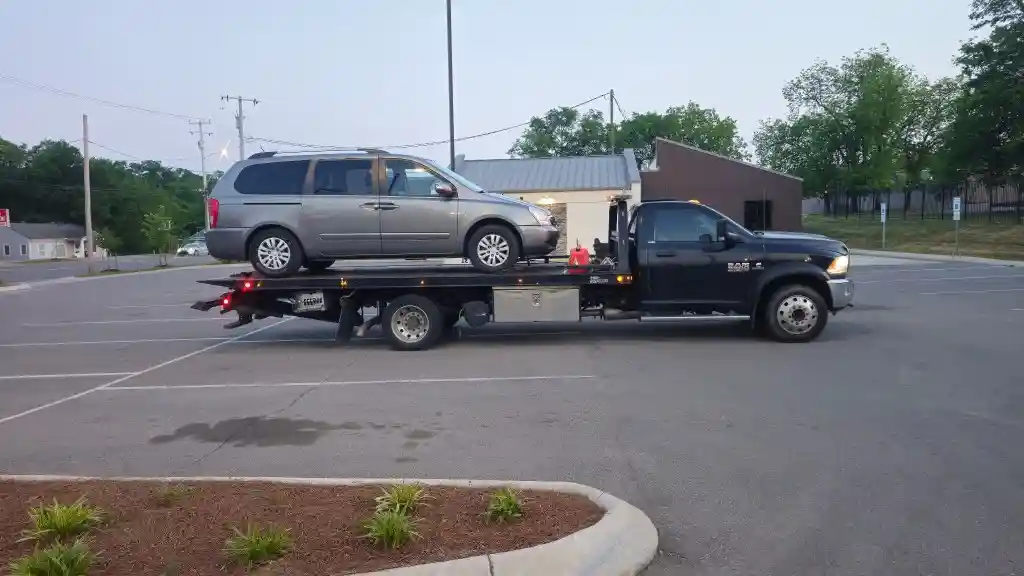
Our post-accident checklist for Nashville drivers covers documentation, reporting, and the tow decision in more detail. If the vehicle isn't safe to drive, our accident recovery service can move it from the scene, and a flatbed tow carries it with all four wheels off the ground.
Need a tow after a crash? Call (615) 756-5330.
Stranded or Stuck? We're Ready.
Our dispatchers are standing by around the clock — one call and a truck is on the way