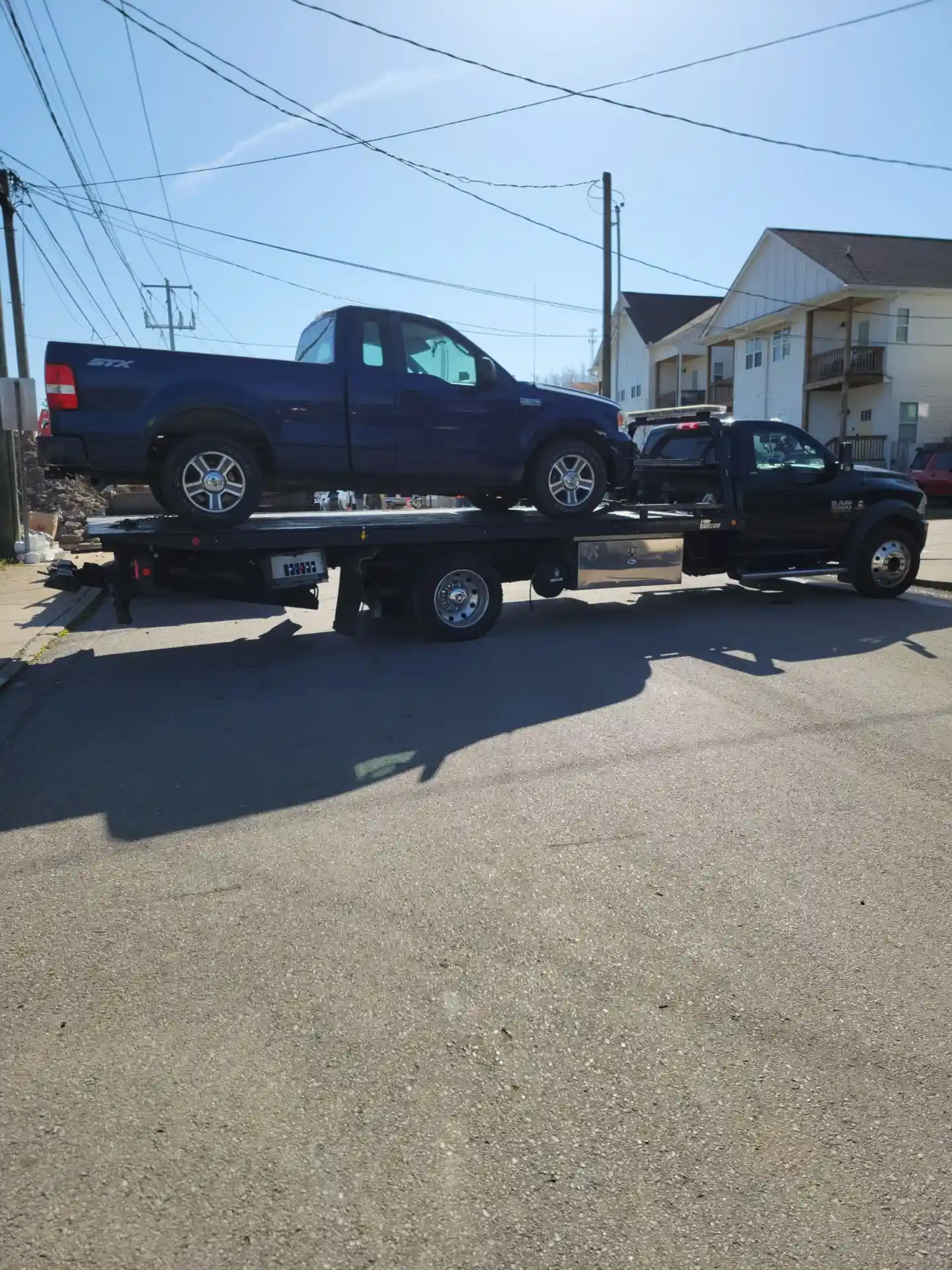
Page image supporting How Winter Ice Storms Change Tow Truck Operations. An operator’s view of Nashville winter towing — why ice ramps fail first, dispatc…
Inside a Tow Operator's Playbook During an Ice Storm
An operator’s view of Nashville winter towing — why ice ramps fail first, dispatch triage during storms, and what changes about recovery work.
Nashville winters are a strange thing to plan around. We'll go three years where the worst we get is a hard frost and a couple of slick mornings, and then one Tuesday in February the whole city locks up under a quarter inch of ice and nobody can get to work. As tow operators, our entire shift pattern changes the moment the forecast turns. So this article is the operator-side of winter — what actually happens behind the dispatch board, why we push flatbeds for almost every winter recovery, and how we triage when the phone won't stop ringing.
If you want the driver-side prep — battery checks, tire pressure, what to keep in the trunk — pair this with our roadside emergency kit checklist. This one is more about what changes on our end.
Winter changes the job, not just the weather
The thing most people don't think about is that our trucks are driving on the same iced-over roads everyone else is. We can't help you if we end up in the ditch next to you, so the first rule of winter dispatch — and this surprises some callers — is that response times slow down on purpose. Not because we don't care. Because rushing is exactly how you total a $90,000 wrecker and add to the problem.
Volume is the other half of it. A normal Tuesday night, we might run 12 to 15 calls. The Tuesday of an ice event, that number can hit 40 before midnight. Same number of trucks, same number of drivers, three or four times the calls. Triage stops being optional and becomes the entire job.
And the recovery work itself takes longer in winter. Hooking a car on ice is slower. Walking around the truck on ice is slower. Setting cones safely on a sloped iced shoulder is way slower. A job that takes 15 minutes in May takes 30 in February, and that's if nothing weird happens.
Why we push flatbed in winter, almost always
A wheel-lift truck is fast and cheap, and most of the year it's the right tool for plenty of jobs. In winter, it's not.
When you've got two of the customer's wheels still on the ground and the truck pulling them down a road that may or may not be icy, the trailing car has its own ideas about which direction it wants to go. I've seen wheel-lifted cars fishtail in winter conditions in ways that nobody who's never towed would expect. A flatbed gets all four wheels off the ground. The car goes exactly where the truck goes, end of story. That's worth the extra time and the extra cost in winter.
If a customer calls us during an ice event and a flatbed is available, that's what we send, even on jobs we'd normally do with a wheel-lift.
Where we actually run during ice events
After enough winters in this city, the dispatch board basically writes itself. Certain places get cars on them before anywhere else, and those are where we stage trucks the moment a freezing-rain forecast lands.
The elevated stuff goes first. Always. The I-24 / I-40 split downtown, the 440 interchange ramps, the Briley overpasses — all of them ice over a solid 30 to 45 minutes before the surface roads do, because there's nothing under them holding heat. We learned years ago to stage flatbeds within a few minutes of these ramps because that's where the first wave of slide-offs happens. If you want a sense of which ramps cause the most trouble, our most dangerous Nashville intersections write-up overlaps almost perfectly with our winter call map.
Then the residential hills. Granny White Pike. Parts of Old Hickory through Bellevue. The steep neighborhood streets up around Sylvan Park and parts of 12 South. Roads people drive every day of their lives without a second thought become impossible. We get a lot of "I just couldn't make it up my own street" calls, and those are not silly calls — when ice is on a 6% grade, no FWD sedan in the world is making it up.
Black ice between 5:30 and 7:30 in the morning is our single busiest window. Air temps are still cold but the pavement is colder, and roads that looked harmlessly wet at midnight are now invisible glaze. Our slide-off call volume in that two-hour stretch is roughly four times any other window of the day during a freeze event. If you can avoid being on the road at sunrise during a hard freeze — even by an hour — please just do that.
If you do end up off the road
The single biggest mistake I see people make once they're stuck is trying to drive out of it. Spinning the wheels packs the snow into ice, digs the car deeper, and on some vehicles can overheat the transmission inside of a couple of minutes. If you're stuck, you're stuck. Stop, turn the wheels straight, and call.
A winch-out from a shallow ditch is a fast, cheap job. A winch-out from a deep ditch you made deeper is a longer, more expensive job, and on bad enough terrain it might require a second truck. The earlier you call, the cheaper this gets.
If you're somewhere that traffic could hit you — interstate shoulder, blind curve, anywhere — get out of the car and away from it on the uphill side of the road if you can. People who get hurt at winter accident scenes usually get hurt by the second car, not the first impact.
How dispatch actually triages
I'm being upfront about this because it sets your expectations. During a real ice event, we sort calls by danger first, not by who called when.
Active accidents go first. Highway-blocking breakdowns go next. Anything where someone is in immediate physical danger jumps the line. After that, we work down through interstate breakdowns, then surface-road breakdowns, and dead batteries in driveways come last. They're real calls and we'll get to you, but they sit behind the rollover on I-24.
We also stage based on the kind of storm. A clear-sky frost event spreads our trucks into residential areas, because we know the morning hill calls are coming. A freezing-rain event clusters us near the interstates because that's where the multi-car incidents pile up. Reading the forecast right saves 15 to 20 minutes per response, which during a surge is the difference between a 45-minute wait and a 90-minute wait for somebody.
The gear is different too
A handful of small things change on the truck side when temperatures drop.
We swap to synthetic winch line in the cold because steel cable gets brittle and loses some of its handling. Tow straps and chains get wiped down between jobs because ice buildup can let them slip under load, which is genuinely dangerous. Flatbed decks get a thin anti-ice treatment before storms so a customer's car doesn't freeze itself to the deck mid-transport (which sounds funny but is a real thing that has happened). And we carry extra sand and absorbent on every truck because winter scenes almost always involve fluid and ice mixed together — the worst possible combination for footing.
None of this matters to the customer in the moment. But it's why our winter response looks the way it does.
The honest advice
If the roads look bad and you don't have to be out, don't be out. We will still be running when the ice clears. Most of the calls we go on in a serious ice event are calls that didn't have to happen — somebody who probably could've worked from home, or pushed an errand to the next day.
If you do have to call us during a storm, give us as much detail as you can up front. Exact location, what kind of car, what happened, and whether you're in a safe spot. Every detail you give dispatch shaves time off getting the right truck to you.
When the ice rolls in, our cold-weather emergency response is staffed and ready 24/7.
Stuck, slid off, or stranded in winter weather? Call (615) 756-5330 — we run in all conditions, just a little slower and a lot more carefully. West-side and Bellevue drivers — bookmark our Bellevue I-40 & Highway 70 tow guide for the bridges and overpasses that ice first.
Stranded or Stuck? We're Ready.
Our dispatchers are standing by around the clock — one call and a truck is on the way