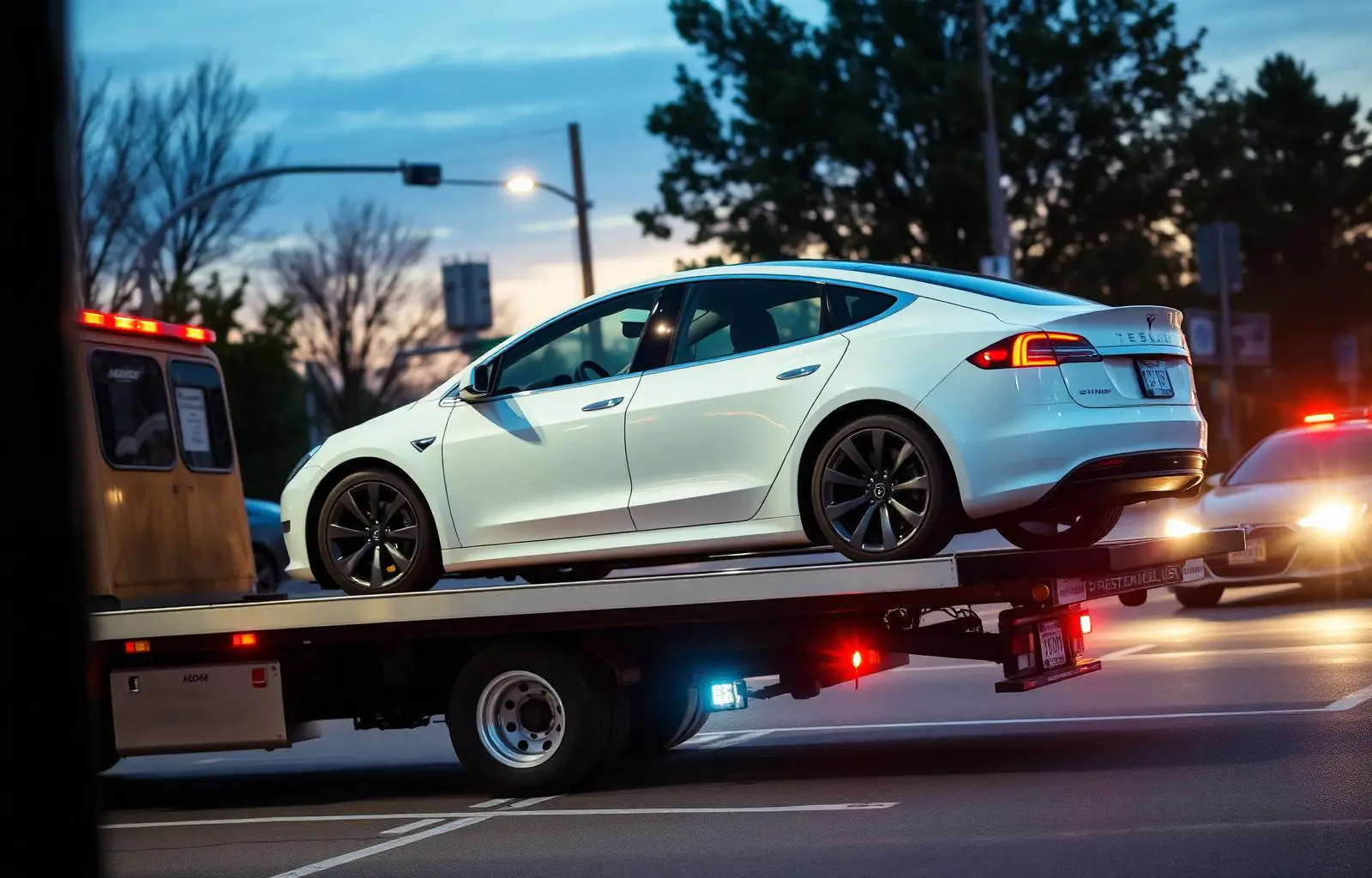
EV Towing Nashville TN — Flatbed Electric Vehicle Transport
Tesla, Rivian, F-150 Lightning or another EV stranded in Nashville? Flatbed transport is our preferred method, and we follow the manufacturer's towing requirements for each make and model.
Call Now: (615) 756-5330Page image supporting EV Towing Nashville TN | Tesla and Electric Flatbed Service. EV towing Nashville — flatbed transport for Tesla, Rivian, Lightning, I…
EV Conditions to Describe Before Dispatch
"Tesla Ran Out of Charge on I-65 or I-40"
If your EV is out of charge on I-65 or I-40, provide the exact model and condition. Discuss your chosen charging destination with dispatch; equipment fit and destination access must be confirmed.
"EV Won't Shift to Neutral"
A vehicle that will not shift or has locked wheels needs model-specific assessment. Report the low-voltage symptoms and wheel condition; access, necessary equipment, and manufacturer-approved loading requirements must be confirmed before a plan is agreed.
"Flat Tire on a Tesla — No Usable Spare"
If you have a flat tire, report whether a usable spare is available and describe the wheel condition. Do not drive on an unsafe tire; discuss suitable towing to your chosen tire shop.
"Rivian R1T or Hummer EV — Stuck Off-Road in Davidson County"
Vehicle weight varies by model and configuration. Provide the actual weight, dimensions, terrain, and wheel position so dispatch can assess rated equipment and safe access. Recovery or transport is not guaranteed for every electric truck.
"Collision Recovery — EV After an Accident on Briley Parkway"
After an EV collision, stay away from damaged battery components and high-voltage cabling. Call 911 for smoke, fire, immediate danger, or a blocked lane, and follow responders' instructions. Report the damage to dispatch; scene safety and suitable transport must be assessed, not assumed.
"Charger Failure at Home — Need Tow to a Fast Charger"
For an EV that will not charge at home, tell dispatch the model, battery state, and location. Discuss a suitable charging or repair destination; transport depends on equipment fit and access.
How We Choose the Right EV Transport Method
Electric vehicles differ by model, drivetrain, wheel condition, and battery state. Before loading, dispatch identifies the exact vehicle and checks its current manufacturer instructions rather than assuming one method fits every EV.
Manufacturer transport and securement requirements vary. The exact vehicle, weight, wheel condition, and approved transport points must be checked against suitable available equipment; no universal strap setup or damage-free result is promised.
Whether your EV died on a Nashville interstate, ran out of charge between chargers, or won't wake up after sitting at the airport, call for a current ETA and equipment check. We can help plan the destination — charger, dealer, home, or collision center. Call (615) 756-5330.
EV Model Details for an Equipment Check
Model 3, Model Y, Model S, Model X, Cybertruck
F-150 Lightning, Mustang Mach-E, Hummer EV, Lyriq, Bolt
R1T, R1S, Lucid Air — capacity confirmation required
Ioniq 5/6, EV6, Niro EV, Polestar, BMW i4/iX, ID.4
EV Loading Requirements to Confirm
Current manufacturer instructions and vehicle condition determine the transport method; suitable equipment and ratings must be confirmed.
Confirm the manufacturer-approved transport points and required restraints for the exact vehicle. Do not handle high-voltage components.
Report locked wheels or an unresponsive low-voltage system. Dispatch must confirm a suitable model-specific loading approach; a brake release is not guaranteed.
Keep away from damaged battery components and high-voltage cabling. Follow emergency responders' directions; this service does not imply first-responder isolation capability.
Call 24/7 with your exact EV model, configuration, condition, and location. Dispatch must confirm suitable available equipment and loading requirements before accepting the tow; not every vehicle can be accommodated.
Call Hook Em' Up Towing: (615) 756-5330Helpful Guides
- How to Check the Right Tow Method for an Electric Vehicle
How transport mode, wheel condition, battery state, and model-specific manufacturer instructions affect electric-vehicle towing.