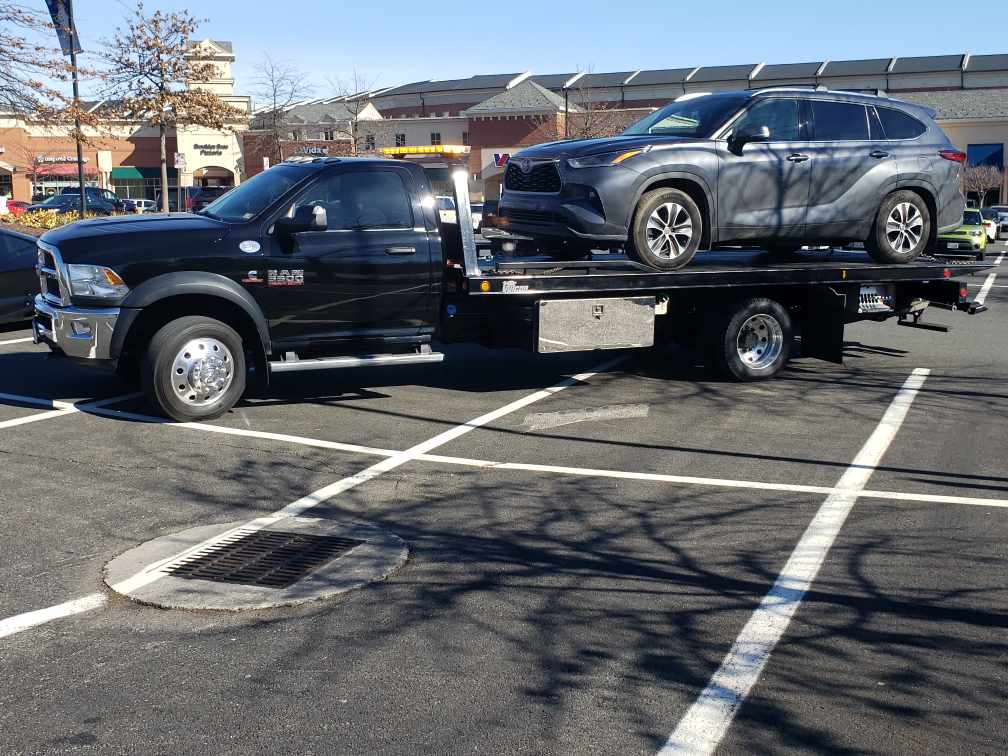
Towing Etiquette: What to Do When the Truck Arrives - Nashville towing service
← Back to Blog
Towing Tips

Towing Etiquette: What to Do When the Truck Arrives

Learn the best tow truck etiquette and safety steps for Nashville drivers while waiting for a tow truck on I-40 or busy Davidson County roads.

Towing Tips • July 13, 2026 • Hook Em' Up Towing Team

Last Tuesday night, I was backed up against a concrete barrier on the shoulder of I-40 East, right where the split hits for the 440 Loop. It was raining—that nasty Nashville mist that turns the road oils into a skating rink—and I had a driver standing three feet away from his stalled SUV, trying to hand me his registration while traffic whizzed by at 70 miles per hour. Every time a semi passed, the wind gust nearly knocked him over. I had to yell at him to get back inside the vehicle for his own safety before I could even hook up my winch line.

After ten years behind the wheel at Hook Em' Up Towing, I’ve seen just about everything on the side of Briley Parkway and Charlotte Pike. Most folks are stressed when they call us, and I get it. Your day is ruined, you’re late for work, or you’re worried about a repair bill. But how you handle those few minutes when the truck pulls up makes a massive difference in how fast, safe, and cheap the recovery goes. This isn't about being polite for the sake of it; it’s about the mechanics of the tow and the safety of everyone on the asphalt.

The Golden Rule: Stay in the Truck

If you are broken down on a major Nashville interstate or a high-traffic stretch like Nolensville Pike, the most important piece of tow truck etiquette is staying inside your vehicle until I tell you otherwise. I see people standing on the white line trying to wave me down. I see you; my beacons are flashing, and I’ve got GPS coordinates. Standing outside makes you a target for distracted drivers.

When I pull up, I’m looking for a few things immediately: Is your wheel turned? Are your hazards on? Is there enough clearance for my bed to tilt? If you’re standing in that gap, I can't work. Keep your seatbelt on and stay put until I knock on your window. If we are in a parking lot in Green Hills, sure, step out and meet me. But on the highway, the car is your roll cage. Use it.

Prepare the Vehicle Before I Back Up

One thing that slows down the towing process more than anything else is a car that isn't ready to be moved. While you’re waiting for a tow truck, there are a few technical things you can do to help us get you off the road faster:

  1. Straighten the wheels: If your steering isn't locked and you have power, get those front wheels straight. Trying to pull a car with the wheels turned at a 45-degree angle puts massive lateral stress on my winch cable and can pop a tire bead or damage your control arms.
  2. Know your key situation: If you have a modern proximity fob and the battery is dead, I need to know. Many newer vehicles have an electronic shift bypass. For example, on many Chryslers or Rams, there’s a little pull-tab hidden behind a panel near your knee that drops the transmission into neutral. If I can't get it in neutral, I have to use dollies, which adds time and cost to your bill.
  3. Clear the dash: Grab your phone, your wallet, and your house keys. Once that car is up on the flatbed, it’s a lot harder to climb up there and fish a charging cable out of the center console.

Understanding the Hook-Up

When I get to work, I’m calculating load ratings and pivot points. If I’m using a flatbed, I’m looking for your vehicle's factory tow eye—that little threaded bolt that usually lives in your trunk tool kit. If you know where that is, have it ready. It saves me from having to crawl under your car with a J-hook and hunt for a solid frame hole, which is getting harder with all the plastic aerodynamic under-cladding on new cars.

If you’re driving a 4WD or AWD vehicle, tell the dispatcher that immediately. We cannot "drag" an AWD vehicle with two wheels on the ground without roasting your center differential. In Nashville, we deal with a lot of steep driveways in places like Bellevue or Forest Hills. If I’m winching you out of a ditch or a steep incline, I need to know if the car can hold its own brakes.

Communication with the Dispatcher and Driver

Good etiquette starts the moment you call (615) 756-5330. Be honest about the situation. If you hit a curb and the lower control arm is snapped, don't just say you have a "flat tire." If I show up with a standard floor jack and no blocks or skates, I can't help you, and we’ve both wasted an hour.

When I arrive, give me the "short version" of what happened. I don't need the full history of the car's alternator issues, but I do need to know if the car won't shift into neutral or if the parking brake is stuck. If you've already called your insurance company and have a claim number, have that pulled up on your phone. It keeps the paperwork moving so we can get out of the line of fire.

What NOT to do when the truck arrives:

  • Don't try to help with the chains: I know you’re trying to be helpful, but my winch line is under thousands of pounds of tension. If a hook slips or a cable snaps, it’s lethal. Stay in the safety zone I designate.
  • Don't leave your car unattended without telling us: If you decide to catch an Uber to work before I get there, let the office know. I need the keys to unlock the steering and shift the transmission. If I arrive and the car is locked and you’re in a different zip code, I might have to leave or use a lockout kit, which costs extra.
  • Don't argue about the "hook-up fee": Towing rates in Davidson County are fairly standard, but specialized equipment like winch-outs or using dollies for a locked transmission requires more labor and risk. My goal is to get your car moved without damaging it, and sometimes that requires the expensive gear.

Navigating the Nashville Tow Yard

If your car is being impounded or towed to a yard rather than a shop, the etiquette continues at the window. Most yards in Nashville have specific release hours and require a valid ID and proof of insurance. If you’re being towed from a private lot on Broadway because of a parking mishap, being aggressive with the gate operator won't get your car back faster. Have your paperwork ready, and understand that the driver is often just the guy moving the metal, not the one who wrote the parking policy.

The Technical Side: Why We Do What We Do

People often ask why I spend five minutes adjusting the straps on a car that’s only going three miles down the road to a shop in East Nashville. It’s about physics. A 4,000-pound car becomes a 4,000-pound projectile if I hit a pothole on I-24 and my securement fails.

I use a four-point tie-down system. That means I’m securing each wheel or the frame at four different corners. If you see me crawling under the front end, I’m looking for the "slots" in the frame designed for my T-hooks. If your car is lowered—common with the tuners we see around the Mid-To-Low areas—I have to use race ramps to get the angle right so I don't rip your front air dam off. This takes time. Patience is the best etiquette you can offer.

FAQs for Nashville Drivers

Can I ride in the truck with you? Post-2020, this varies. Most of our trucks have a passenger seat, but if I’ve got a cab full of gear or if there are multiple people in your party, you’ll need to call a ride-share. It’s always best to have a backup plan for yourself while I handle the vehicle.

Where should I have my car towed? If you don't have a regular mechanic in Nashville, I can usually suggest a few reputable shops depending on where we are. If we're near the West End, I know who’s honest. If we're out by the airport in Donelson, I can point you that way. But legally, the choice is yours.

How much should I expect to pay? A standard tow usually involves a hook-up fee plus a per-mile rate. In Nashville, expect additional fees if I have to use "skates" (plastic blocks that go under tires that won't roll) or if the recovery is "off-road" (even just two wheels in the mud off the shoulder).

Final Thoughts on Roadside Safety

At the end of the day, my job is to solve a problem and keep the lanes moving. When you follow these basic steps—staying in the car, having your keys ready, and letting me handle the technical hook-up—you’re helping me get home to my family, too. Nashville traffic is getting crazier every year, and the side of the road is no place for a committee meeting.

Next time you’re stuck near the Titans stadium or stalled out on the way to Antioch, take a deep breath. We’ll get the hooks on, we’ll get the car secured, and we’ll get you off the shoulder. Just keep those wheels straight and your hazards on until you see my yellow lights in the rearview mirror.",

Questions About Your Situation?

Get a straight answer and an honest quote from a locally owned Nashville company

Call Now: (615) 756-5330