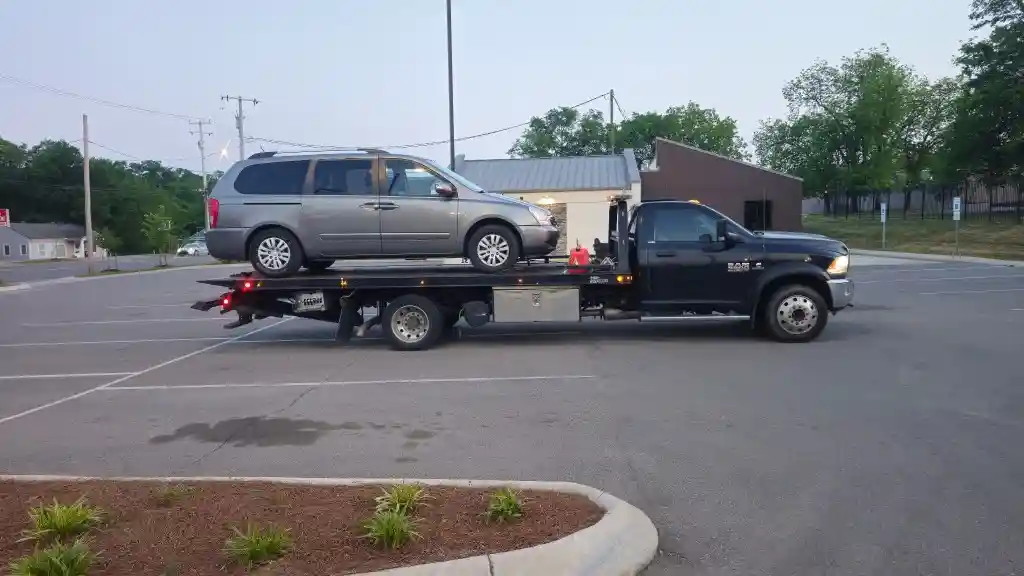
Page image supporting Nashville Car Accident Checklist. MNPD reporting, safe interstate placement, insurance steps, and tow decisions — the exact checklis…
A Step-by-Step Plan for the First 10 Minutes After a Nashville Crash
MNPD reporting, safe interstate placement, insurance steps, and tow decisions — the exact checklist a Nashville operator wants you to follow after a wreck.
I've been hooking up wrecked cars in Nashville since 2010, and the calls that go smoothest are almost always from drivers who knew what to do in the first ten minutes. The ones that turn into a mess — missing insurance info, no police report, a car towed somewhere they can't reach until Monday — usually trace back to a few decisions made in those first ten minutes.
So this is the checklist I'd hand to my own kid the day they got a license in Davidson County. Step by step, in the order it actually happens. Specific to Nashville — MNPD procedures, where it's safe to stop on our interstates, and what to expect when the tow truck pulls up.
If you also want to know who ends up paying for the tow afterward, our Tennessee accident tow bill guide walks through fault, insurance, and storage. For the interstate spots where we run most of our crash calls, see the Nashville intersections where most wrecks happen.
The first five minutes at the scene
Step 1: Stop, Breathe, Check Yourself
Before you do anything else, sit still for five seconds and check your own body. Adrenaline hides injuries. Move your neck slowly, wiggle your fingers and toes, look for blood. If anything feels wrong, do not get out of the car — call 911 first and stay put.
If you're okay, check anyone else in the vehicle. Kids especially. A car seat can hide a lot.
Step 2: Get Off the Travel Lane If You Safely Can
This is where Nashville geography matters. On a surface street with light traffic, leave the cars where they are until police arrive. But on I-40, I-65, I-24, I-440, or Briley Parkway, sitting in a live lane is genuinely dangerous — secondary crashes on Nashville interstates happen every single week.
Tennessee's Move Over and Steer It / Clear It laws actually require drivers to move drivable vehicles out of the travel lane if no one is hurt. If your car still rolls, get it to the shoulder, an exit ramp, or the nearest emergency pull-off. Take photos of the original position first if you can do it in two seconds — a quick phone shot from the driver's seat is enough.
If the car won't move, turn on your hazards, stay buckled, and wait. Do not stand outside the vehicle on the shoulder of a Nashville interstate. We see what happens to people who do.
Step 3: Call 911 (Even for Minor Crashes)
In Nashville, Metro Nashville Police Department (MNPD) handles crash response inside Davidson County. Tennessee Highway Patrol covers the interstates outside Metro and assists on major incidents. Either way, dialing 911 routes you correctly.
Call 911 if:
- Anyone is injured, even slightly
- The crash blocks any travel lane
- A vehicle is disabled and needs to be towed
- The other driver is uncooperative, impaired, or trying to leave
- The combined property damage looks like it might exceed $1,500 (state reporting threshold)
For very minor fender-benders in a parking lot with no injuries, MNPD may direct you to file a self-report later. But when in doubt, call. An official report is the single best thing you can have when insurance starts asking questions.
Exchanging information and documenting the crash
Step 4: Exchange Information — All of It
While you're waiting for the officer, swap the following with every other driver involved:
- Full name and phone number
- Driver's license number and state
- Insurance company, policy number, and the phone number on the insurance card
- License plate and state
- Year, make, model, and color of each vehicle
- Photos of their insurance card and license — don't rely on writing it down
If they refuse, don't argue. Just photograph their license plate and wait for the officer. That's what police are for.
Step 5: Document the Scene Like It Matters
Because it does. Take more photos than you think you need:
- Wide shots of both vehicles in position, from multiple angles
- Close-ups of every dent, scratch, and bumper crack — yours and theirs
- The intersection or mile marker, road signs, traffic signals
- Skid marks, debris, glass on the pavement
- Weather conditions, lighting, anything wet or icy
- Any visible injuries (yours)
- The other driver's vehicle in case details change later
If there are witnesses willing to give a name and number, get it. People disappear once the tow trucks arrive.
Step 6: Talk to the Officer — Briefly and Factually
When MNPD or THP arrives, give a short, factual account. "I was northbound on Gallatin Pike, the signal turned green, I entered the intersection, the other vehicle came from my left." Stop there.
Do not speculate on speed, fault, or what the other driver was doing. Do not say "I'm sorry" — in Tennessee that can be used as an admission. Don't argue with the other driver in front of the officer. Just answer what's asked.
Get the incident number before the officer leaves. You'll need it for the report and for your insurance claim.
Paperwork, the tow, and your insurance claim
Step 7: Get the Nashville Accident Report
MNPD crash reports in Davidson County are typically available 3–10 business days after the incident. There are three ways to request one:
- Online through MNPD's records portal (fastest, small fee)
- In person at the MNPD Records Division
- By mail with a written request and check
You'll need the incident number, the date, and the names of the drivers. Order at least two copies — one for your records, one for your insurance company. If an attorney gets involved later, they'll want their own.
For crashes on interstates handled by Tennessee Highway Patrol, the report comes from the TN Department of Safety crash records portal instead.
Step 8: Decide About the Tow
If the car drives safely and there's no fluid leak, no airbag deployment, and the wheels point where they should — you can usually drive it home or straight to your repair shop. But "safe to drive" is doing a lot of work in that sentence.
You should not drive away if:
- Any airbag deployed (the steering column may be compromised)
- Fluid is pouring or dripping (coolant, oil, transmission, brake)
- A tire is flat, bent, or the wheel is pointing the wrong direction
- The hood won't latch closed
- Headlights or taillights are smashed and it's getting dark
- The frame looks bent (even subtly — sight down the body line)
- You smell fuel
- The car pulls hard to one side at low speed
When in doubt, call a tow. Driving a marginal car home after a wreck is how a $2,000 repair turns into a $9,000 one. We see frame damage made permanent every week from people trying to "just make it home."
If you need flatbed pickup after an accident, that's the right call — a wheel-lift drags the front wheels and can finish off a bent strut tower.
If police direct the tow, you usually don't pick the company — it'll be whoever's on the rotation list for that zone. If you want your own company, ask the officer politely; sometimes you can request a specific operator if the scene is cleared and the car isn't blocking traffic.
Step 9: Notify Your Insurance — Same Day
Call your insurance company before the day ends, even if you weren't at fault. Have ready:
- The incident number
- The other driver's full info
- Photos of the scene and damage
- Date, time, and exact location
- Names and numbers of any witnesses
- The tow company's name and where the car was taken
Tennessee is an at-fault state, so the at-fault driver's insurance typically pays for the damage and the tow. But you still need to file with your own carrier — they coordinate with the other side and handle subrogation. If you have collision coverage, your insurer may pay your claim first and chase reimbursement on its own.
Step 10: Track Where Your Car Went
This is the step people miss. If your car was towed by a police-directed wrecker, find out within 24 hours:
- The name and address of the tow yard
- The yard's hours (many close evenings and weekends)
- The release procedure and what ID you need
- Storage fee rate per day — these add up fast
- Whether the insurance adjuster can inspect it on-site
Storage fees in Nashville commonly run $25–$35 per day and start accruing the moment the car is logged in. Don't let it sit in a yard for two weeks while you wait on insurance — get an adjuster out, get a release plan in motion, or move the vehicle to your shop of choice.
A Few Nashville-Specific Things to Remember
Interstate shoulders are not safe. I-40 between downtown and the airport, I-65 through the I-440 interchange, and the I-24 / I-40 split downtown — none of those have shoulders wide enough to stand on. Stay in your car with your belt on until help arrives.
Hit-and-run rate is real. If the other driver leaves the scene, get the plate if you can and report it immediately. A nearby gas station or business camera may have caught it; MNPD can request footage if you ask early.
Tow scams target crash scenes. If a truck shows up that wasn't called by police or by you, ask for their TMVC license and a written rate sheet before they hook anything. You're under zero obligation to use a wrecker that just rolled up.
The Move Over Law applies to tow trucks. When you're back on the road and you see a wrecker on the shoulder with flashing amber lights, change lanes or slow down. That's me and my drivers out there.
What to Carry So Step 1 Goes Faster
Stuff a small accident kit in your glovebox or center console. It's all things you'd want at 10 PM on the shoulder of I-65:
- A small flashlight with fresh batteries
- A pen and a folded sheet of paper
- Your current insurance card (not just the app — phone might be dead)
- A copy of your registration
- Two reflective triangles or LED flares
- A laminated card with emergency contacts
- A spare phone charger cable
For the full breakdown, our roadside emergency kit checklist covers what every Nashville driver should keep in the trunk year-round.
When to Call Us
If you've been in a crash and your car can't drive — call (615) 756-5330. We run flatbeds 24/7 across Davidson County, work clean accident scenes for MNPD and THP every week, and we'll itemize the bill before you sign anything. If the wreck was on I-65, our who to call for I-65 breakdowns guide explains exactly how we handle interstate calls. See every service at Hook Em' Up Towing.
Stranded or Stuck? We're Ready.
Our dispatchers are standing by around the clock — one call and a truck is on the way