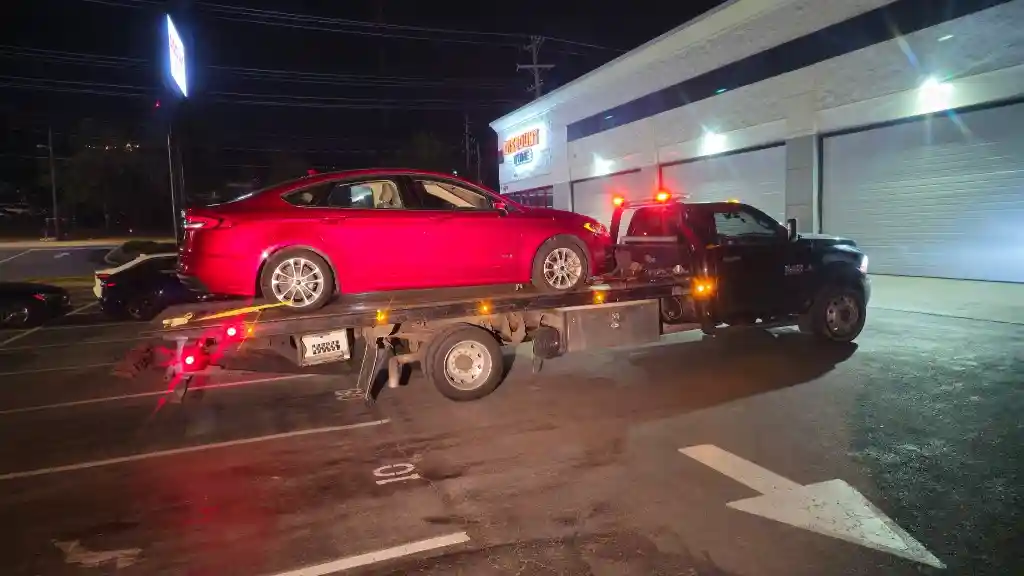
Page image supporting Alternator Failure Warning Signs. Dim headlights, a dash battery light, a whining belt — the alternator warning signs Nashville driv…
How to Spot a Dying Alternator Before It Strands You
Dim headlights, a dash battery light, a whining belt — the alternator warning signs Nashville drivers miss, and the test that rules out the battery.
Most drivers find out their alternator is dying the same way: they turn the key in a parking lot and nothing happens. They jump the car, drive home, park it, and the next morning it's dead again. The battery gets blamed, a new one gets installed, and three days later they're stranded again — because the battery was never the real problem. The alternator was. Here's how to tell the difference from the driver's seat, before you spend money on the wrong part or end up on the shoulder of I-440 at 11 p.m.
What an Alternator Actually Does
A car battery has one job: turn the starter motor long enough to fire the engine. Once the engine is running, the alternator takes over. It spins off the serpentine belt, generates 13.8–14.4 volts of charging current, and runs every electrical system in the car — headlights, AC blower, fuel pump, ignition coils, the radio, the dashboard, the cooling fans, all of it. It also tops the battery back up so the next start works.
When the alternator quits, the battery becomes the only power source for a system designed to draw far more than a battery can deliver alone. The car will keep running on battery power for somewhere between 10 and 45 minutes depending on what's switched on, and then it dies — completely — wherever it happens to be at that moment.
That is the failure mode that strands people. Not a slow morning no-start. A rolling shutdown in traffic.
The Five Warning Signs Before It Strands You
A failing alternator almost always gives signals before it gives up. The problem is that most of them look like other things, so drivers shrug them off. Here are the five we see most often on Nashville tow calls:
- Dim or pulsing headlights at idle. Stop at a red light and watch the dashboard reflection on the windshield. If the headlights perceptibly dim every time you press the brake or turn on the AC, the alternator is struggling to keep up. Healthy alternators hold voltage steady regardless of load.
- The battery light on the dash. That little red battery icon is not a "battery" light — it's a charging-system light. When it comes on, it means the alternator is producing less voltage than the battery is. If it glows steadily, you have hours, not days. If it flickers on bumps, the wiring or the alternator pulley is failing.
- A whining or growling noise from the front of the engine. Alternator bearings make a high-pitched whine as they wear, separate from belt noise. A deeper growl usually means the rectifier diodes are starting to short. Either one is a "drive straight to a shop" situation.
- Slow electrical accessories. Power windows that crawl, a sunroof that hesitates, an AC blower that runs weaker on max than it used to. These all draw heavy current, and a weak alternator can't supply it.
- A burning-rubber smell from under the hood. A slipping serpentine belt or an alternator pulley that's seizing both produce belt smoke. Pop the hood at the next safe stop — a glazed, cracked, or shiny belt is your warning.
If any two of those show up at the same time, the car is on borrowed time. One alone is worth a voltage check at any parts store with a free testing service. They'll put a meter on the battery posts with the engine running and read the alternator output directly. Anything under 13.6 volts at idle with no accessories on is failing.
Why It Looks Like a Bad Battery (and Isn't)
This is the trap. The symptoms of a dying alternator at the moment of failure look identical to a dead battery:
- Slow cranking, then no cranking at all.
- Dashboard lights dim or flicker as the key turns.
- A jump start brings the car back to life immediately.
Drivers (and a lot of parts-counter staff) read those symptoms as "battery" and swap the battery. The new battery cranks the car fine — once. Then the alternator fails to recharge it, and 24–72 hours later the car is dead again with a brand-new battery in it.
The honest test is this: after a jump start, drive the car for 20 minutes, then immediately try to restart it with the engine off. If it cranks normally, your alternator charged the battery during that drive — battery is the suspect. If it cranks slowly or not at all, the alternator never charged the battery, and that is your problem.
For more on how to tell when a battery is genuinely at the end of its life independent of charging issues, book our jump start service in Nashville — the same techs who diagnose alternators handle battery calls too.
What to Do When You're Already on the Shoulder
If the alternator quit on you mid-drive and the car shut down somewhere it shouldn't be, the priority order is simple:
- Get the car out of the lane of travel. Coasting momentum is all you have. Pick a shoulder, an exit ramp, or a parking lot before the brakes go heavy. Power-assisted brakes lose most of their assist after two or three pedal presses with the engine off.
- Turn off everything electrical. Headlights, AC, radio. If you have hazards, those have to stay on — but kill the rest. You're trying to leave whatever charge remains in the battery for one more crank attempt after help arrives.
- Call a flatbed, not a jump. A jump start will fire the engine, but the car will die again within minutes because the alternator isn't refilling the battery. We get this call a lot — driver pays for a jump, drives two miles, calls back for a tow. The right first call is a tow.
- Don't try to limp it home. Driving on battery alone past the point where voltage drops below the threshold the ignition system needs causes the engine to misfire, the fuel pump to lose pressure, and the computer to throw codes that can stick around long after the alternator is replaced.
For interstate-specific shoulder safety steps — mile markers, exit options, where to wait outside the vehicle — read I-65 Nashville breakdown: the safe step sequence. If you're already stranded, call our Nashville roadside assistance line for jump packs, fuel, or a flatbed dispatch.
Why an Alternator Failure Is a Flatbed Call
A few drivers ask whether they can be towed on a wheel-lift instead of a flatbed when the alternator dies. For a front-wheel-drive car with the front wheels off the ground, technically yes. For everything else, no — and even for that one case, flatbed is better.
The reason has nothing to do with the alternator and everything to do with the drivetrain. An AWD or rear-wheel-drive vehicle towed two wheels down with the driven wheels rolling will spin a dry transmission pump on a dead engine — the exact failure mode our Nashville flatbed towing service is built to prevent by keeping all four wheels off the ground.
Our flatbed towing service is the default recovery for any electrical no-start, because once the engine is off, all four wheels need to ride. The repair shop on the other end of the tow will thank you for not adding a transmission rebuild to the alternator bill.
If you genuinely just need a jump and you're sure the alternator is fine — for instance, the battery died from leaving an interior light on overnight — our jump start service is the cheaper and faster call. The diagnostic above tells you which one you actually need.
How to Make an Alternator Last
Alternators don't usually die from age alone. They die from heat, vibration, and corrosion — and a few habits make all three worse:
- Don't let the serpentine belt go past its replacement interval. A slipping belt overworks the alternator pulley bearings. Most manufacturers spec 60,000–100,000 miles for the belt; check yours.
- Keep the battery terminals clean. Corroded terminals raise resistance, which makes the alternator work harder to push current through. A wire brush and a smear of dielectric grease at every oil change is enough.
- Replace a weak battery promptly. A battery that's failing to hold a charge forces the alternator to run at full output continuously, which is what kills alternators. The two failures feed each other.
- Don't power high-draw aftermarket gear off the battery directly without a proper relay and fuse. Off-road light bars, big subwoofer amps, and inverters wired badly all kill alternators young.
A factory alternator in a normally-driven car should last 100,000–150,000 miles. Most that we see fail early were running against a failing battery or a worn belt for months before the alternator gave up.
The Short Answer
Watch for dim headlights at idle, the dash battery light, alternator whine, weak power accessories, and any burning-rubber smell. Don't assume a no-start is the battery — drive 20 minutes after a jump and try to restart with the engine off; if it won't crank, the alternator never charged it. Once the car shuts down mid-drive, don't try to limp it. Call a flatbed.
Hook Em' Up Towing handles flatbed recoveries and jump start service across Nashville and the surrounding ZIP codes 24/7. Call (615) 756-5330 and we'll have a truck out in 30–45 minutes.
Questions About Your Situation?
Get a straight answer and an honest quote from a locally owned Nashville company