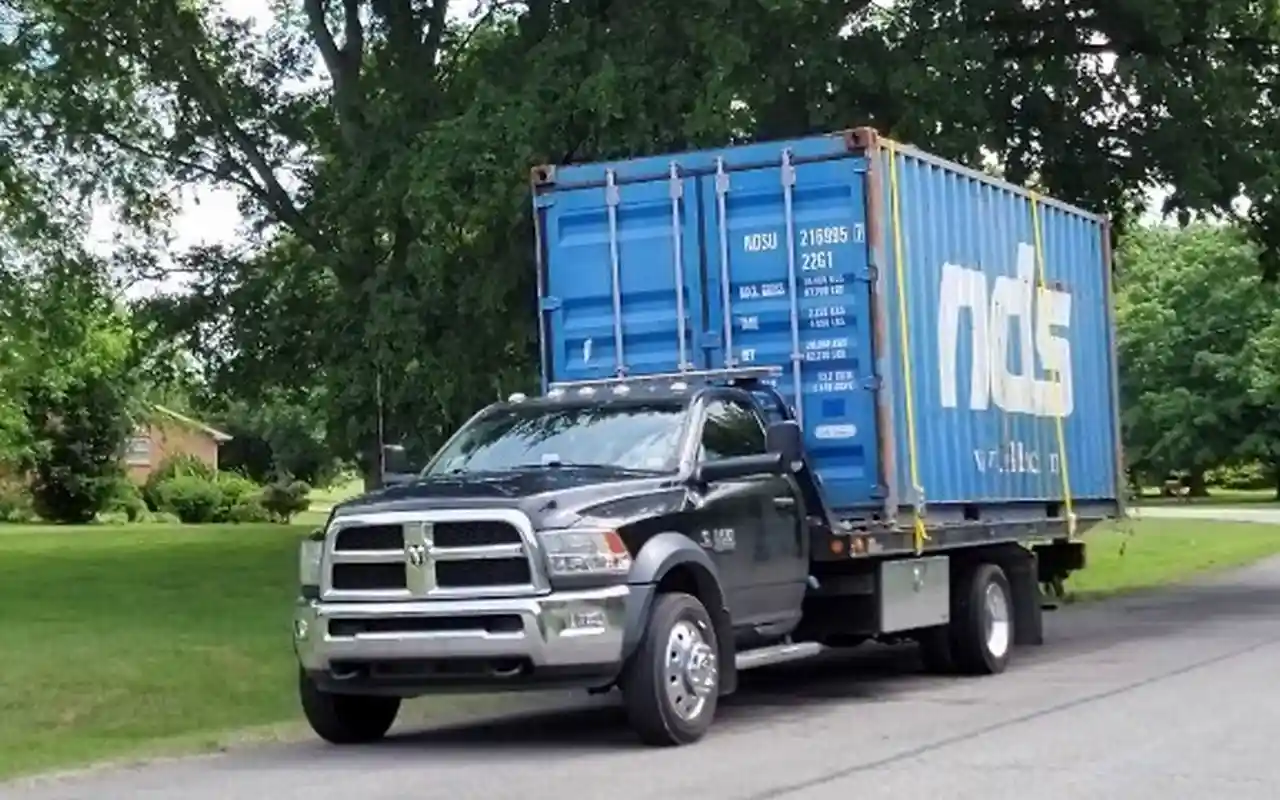
Page image supporting Long Distance Towing vs Auto Transport: Cost Comparison. Direct flatbed tow or multi-car carrier? Compare costs, timelines, insuranc…
Long Distance Towing vs Auto Transport: Cost Comparison
Direct flatbed tow or multi-car carrier? Compare costs, timelines, insurance, and when each option makes sense for moves over 100 miles.
When you need a vehicle moved more than 100 miles, you've got two fundamentally different options: hire a towing company for a direct flatbed run, or book an auto transport carrier that stacks your car on an open trailer with seven others. The right choice depends on your timeline, budget, and how much control you want over the process.
This guide compares both options side-by-side — costs, timelines, insurance, and the scenarios where each one makes sense. We've done thousands of long-haul runs from Nashville, so we'll give you the honest breakdown including when a carrier might actually be the smarter call.
What Counts as Long Distance?
There's no official definition, but in the towing world, anything over 50 miles starts getting into long distance territory. Once you're past about 100 miles, you're firmly in it. We regularly handle runs from Nashville to:
- Memphis — about 210 miles, roughly a 3-hour drive
- Knoxville — around 180 miles, just under 3 hours
- Chattanooga — 130 miles, a solid 2-hour haul
- Atlanta — 250 miles, about 3.5 to 4 hours depending on I-24/I-75 traffic
- Louisville — 175 miles, roughly 2.5 hours up I-65
- Birmingham — 190 miles, about 3 hours south on I-65
We've also done runs as far as Florida, the Carolinas, and up into Ohio. If there's a road to it, we can get your vehicle there. The question is always whether it makes financial sense versus other options — and we'll be honest with you about that.
How We Price Long Distance Runs
Short tows use a hook-up fee plus per-mile charge. Long distance works differently. For anything over about 30 miles, we quote a flat rate based on:
Total distance is the obvious one. But it's not just mileage — we factor in the route. Running I-40 to Memphis is straightforward interstate. Running back roads through the Cumberland Plateau to pick up a car in Crossville involves two-lane highways, elevation changes, and slower speeds. Same distance, very different job.
Vehicle type and condition matters a lot. A running sedan that we can drive onto the flatbed takes 15 minutes to load. A wrecked SUV with no front wheels that needs to be winched sideways out of a ditch before we can even start? That's a different conversation. AWD and 4WD vehicles always go on the flatbed — no exceptions — which ties up our most expensive equipment for the full trip.
Deadhead miles are the miles we drive empty to reach you, plus the miles we drive empty back to Nashville after delivery. If you're asking us to pick up a car in Huntsville and deliver it to Knoxville, that's not just the 250-mile run between those cities — it's also the 100 miles to get to Huntsville and the 180 miles back to our yard from Knoxville. We try to keep this reasonable, but it's part of the math.
For most in-state runs (under 200 miles), expect somewhere between $350 and $800. Longer out-of-state hauls typically run $600 to $1,500 depending on all the factors above. We'll give you the exact number before we commit — no surprises at delivery.
Why a Flatbed Is Non-Negotiable for Long Distance
For any tow over about 25 miles, we're putting your car on a flatbed. Period. Here's why:
A wheel-lift or dolly tow means at least two of your vehicle's wheels are spinning on the pavement for the entire trip. At highway speed. For hours. The bearings, tires, transmission, and differential were designed for the car's engine to be running and its systems lubricated while those wheels turn. On a dolly tow? Nothing's lubricated. The transmission isn't pumping fluid. The differential isn't getting oil circulated.
On a 10-mile tow to the shop, this isn't catastrophic. On a 200-mile interstate run at 65 mph? You're looking at potential drivetrain damage that costs more than the tow itself. We've seen it happen — someone saved $200 on a cheap dolly tow from Chattanooga and ended up with a $4,500 transmission rebuild.
Flatbed eliminates all of that. Your car sits on the bed with all four wheels off the ground. No wear, no risk, no drama. That's the only way we'll do a long haul.
Long Distance Towing vs. Auto Transport
People sometimes ask us whether they should hire a towing company or an auto transport broker for long distance moves. Here's the honest answer:
Use us (a towing company) when:
- Your car isn't running and needs to be moved now
- You need door-to-door service on a specific day
- The distance is under 500 miles
- You want one driver, one truck, your car — no middlemen
- You bought a car and need it picked up this week
Consider an auto transport carrier when:
- Your car runs fine and you're flexible on timing
- The distance is 500+ miles
- You can wait 5 to 14 days for pickup
- You're okay with your car being loaded on an open carrier with 8 other vehicles
Auto transport brokers are cheaper per mile because they stack multiple cars. But they also have looser time windows, your car sits on an open trailer exposed to road debris, and the car gets loaded and unloaded at terminals rather than your driveway. For a lot of people, the personal service and guaranteed timeline of a direct tow is worth the premium.
What to Expect on a Long Distance Tow
Here's how a typical run works when you call us:
The quote call. You tell us where the car is, where it's going, what kind of vehicle, and whether it runs. We give you a flat rate on the phone. If it works for you, we schedule the pickup.
Pickup day. Our driver arrives with the flatbed, inspects your vehicle, and documents its condition with photos — dents, scratches, mileage, anything notable. This protects both of us. We load up and hit the road.
In transit. Your car is strapped down with professional wheel nets and ratchet straps. Our driver follows all DOT regulations, takes required rest stops, and drives at safe speeds. We don't rush. For runs over 4 hours, we may need an overnight — we'll tell you upfront if that's the case.
Delivery. We arrive at the destination, unload, and do another walk-around with you or whoever's receiving the car. You confirm it arrived in the same condition it left. Done.
We communicate throughout the process. You'll get updates when we load, when we're on the road, and when we're close to delivery. No guessing, no radio silence.
The Insurance Question
This is important and a lot of people don't ask about it. Any legitimate towing company carrying your vehicle long distance should have:
- Motor carrier authority (if crossing state lines, this is federally required)
- Cargo insurance that covers your vehicle while it's on our truck
- Liability insurance for the truck itself
Ask for proof of insurance before you hand over your keys. We carry full cargo coverage and we're happy to show you documentation. If a company gets squirrely when you ask about insurance, find another company.
Common Long Distance Scenarios We Handle
Online car purchases. You found a great deal on a car in Atlanta or Louisville. It doesn't make sense to fly there, rent a car, buy the vehicle, and drive it back — especially if you don't know the car's mechanical condition yet. We pick it up and bring it to your mechanic in Nashville for inspection.
College student breakdowns. Kid's car dies at UT Knoxville or in Murfreesboro at MTSU. They can't miss class, and you can't take two days off work to deal with it. We grab the car and bring it to your preferred shop in Nashville.
Relocations. You're moving to Nashville (welcome!) and you've got a vehicle that needs to come separately. Or you're leaving Nashville and need a car transported to your new city.
Dealer and shop transfers. Dealerships call us regularly to move inventory between locations. Body shops call us when a customer's car needs specialty work at a facility across the state.
Tips Before You Book
Get the flat rate in writing. Any legitimate long distance tow company will give you a written quote. If they won't, hang up and call someone else.
Ask about the truck. Make sure they're sending a flatbed, not a wheel-lift with a dolly. For the distances involved, flatbed is the only safe option.
Check their DOT number. For interstate transport, the company needs a US DOT number. You can verify it at FMCSA's website. No DOT number for an interstate move? That's a red flag the size of Tennessee.
Remove personal items. Your insurance covers the car during transport, but personal belongings inside it usually aren't covered by cargo insurance. Take out anything valuable.
Leave about a quarter tank of gas. Enough for us to start and maneuver the car, but not so much that you're paying to haul extra weight across the state.
Ready to Move Your Vehicle?
Whether it's across Tennessee or across state lines, we handle it the same way — flatbed only, fully insured, flat rate pricing, and communication the entire way.
Call (615) 756-5330 for a free long distance towing quote. We'll tell you exactly what it costs and when we can get it done. Moving a car across state lines? Quote interstate vehicle hauling with a single dispatch call.
Hook Em' Up Towing — Nashville's Trusted Choice
Locally owned since 2010, serving every Nashville neighborhood with fast, fair service