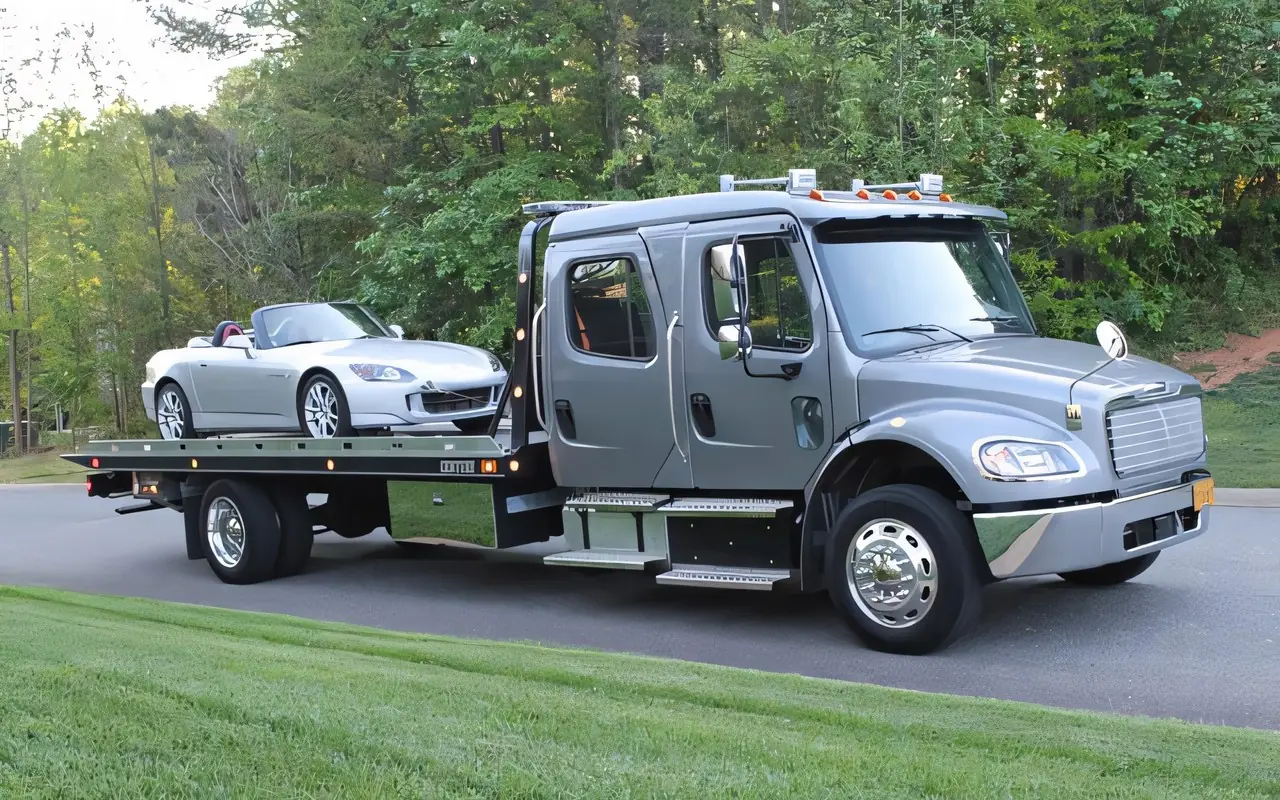
Page image supporting Avoid Towing Scams: Find Reliable Nashville Tow Company. Don't get ripped off! Spot reliable Nashville towing companies vs scammers.…
Avoid Towing Scams: Find Reliable Nashville Tow Company
Don't get ripped off! Spot reliable Nashville towing companies vs scammers. Red flags and questions to ask.
I've been running tow trucks in Middle Tennessee for over a decade, and the stories I hear from customers about bad experiences with other companies could fill a book. Not a fun book — more like a horror novel. So let me walk you through the red flags I've seen firsthand, the scams that keep showing up, and how to protect yourself before you ever need to make that roadside phone call.
The Parking Lot Scam That Won't Die
Here's one that happens more than you'd think: you park at a restaurant or shopping center, walk inside for dinner, and come back to an empty spot. Your car's been towed — sometimes within minutes of you parking. The lot has a tiny sign buried behind a bush that says "unauthorized vehicles towed at owner's expense," and now you're looking at a $300 bill just to get your own car back.
Tennessee law requires that towing signage be conspicuous and readable, but enforcement is spotty. If this happens to you, photograph the signage (or lack of it), note the time you parked versus when the tow happened, and file a complaint with the Tennessee Motor Vehicle Commission. You have rights, even if the tow company is counting on you not knowing that.
Scanner Chasers: The Ambulance Chasers of Towing
After a wreck, the last thing you need is a tow truck driver who showed up uninvited. These operators monitor police scanners and race to accident scenes, then pressure you into signing paperwork while you're still rattled. I've talked to people who signed authorization forms they never read and ended up paying double what a normal tow would cost.
Here's the thing: you are not required to use whatever truck shows up first. Unless your vehicle is actively blocking traffic and you haven't arranged removal, you get to choose your own tow company. Tell the driver "I've already called someone" — even if you haven't yet — and then make your call.
We covered the full step-by-step for handling an accident scene in our post-collision guide, including when police can and can't mandate a specific tower.
The "Storage Fee" Trap
This is the one that makes my blood boil. A company tows your car to their lot — sometimes without you even specifying that destination — and then charges $150 to $250 per day in "storage fees." By the time you figure out where your car is and arrange payment, you might owe more in storage than the tow itself cost.
How to avoid it: Always tell the dispatcher exactly where you want your vehicle taken before the truck rolls. A repair shop, your driveway, a dealership — anywhere specific. If a driver says "we'll just take it to our yard for now," that's a red flag the size of a billboard. Get the destination confirmed in writing via text.
Tennessee requires storage facilities to provide written authorization forms. If you didn't sign one, you have grounds to dispute the charges.
Bait-and-Switch Pricing
The classic version: a company advertises an impossibly low rate to get your call, then layers on surcharges once they arrive and your car is already on the hook. "Highway fee," "after-hours premium," "specialized equipment" — each one sounds plausible individually, but together they triple the quoted price.
The fix is simple: get a binding total before the truck leaves. Not a "starting at" number, not an estimate range — a final, all-inclusive figure for the specific trip from Point A to Point B. Any company that hesitates to provide this is telling you something important about how they do business.
You can cross-reference pricing with our Nashville towing cost breakdown to know what's reasonable before you ever pick up the phone.
Fake Reviews and How to Spot Them
Every tow company in town claims to be the best. Reviews help cut through the noise, but only if you read them critically.
Signs a review is genuine: it mentions specific details like an intersection, a driver's name, what kind of car they had, or how long the wait actually was. The reviewer has left other reviews over months or years. The star rating isn't perfect — a 4.7 with a few honest 3-star reviews is more trustworthy than a flawless 5.0.
Signs reviews are manufactured: dozens of 5-star reviews posted in a short window, each from accounts that have reviewed exactly one business. Generic language like "Great service, fast response!" repeated across multiple reviews. No negative reviews whatsoever — every real business has at least a couple of unhappy customers.
Check multiple platforms. A company that's 4.9 on Google but 2.5 on Yelp is telling you something worth hearing.
The Kickback Repair Shop
Your car gets towed, and the driver casually suggests taking it to "a great mechanic I know." That mechanic pays the driver a referral fee — typically $50 to $100 per car — which gets baked into your repair bill. You end up overpaying for repairs at a shop chosen for its kickback program, not its competence.
Always choose your own repair facility. If you don't have a regular mechanic, ask friends or check reviews separately. The urgency to decide right now is manufactured. Your car will be fine sitting overnight while you do twenty minutes of research.
What Legitimate Companies Look Like
After years in this business, here's what separates the professionals from the predators:
They answer your questions. License number? Here it is. Insurance certificate? No problem. Total cost to your destination? Let me calculate that for you. Legitimate operators have nothing to hide because transparency is how they keep customers coming back.
They have proper equipment. A company that sends a wheel-lift truck for your all-wheel-drive Subaru either doesn't know what they're doing or doesn't care. Either way, you're looking at potential drivetrain damage that costs thousands to fix. The right company asks about your vehicle before dispatching.
They've been around. Not always — there are good new companies too — but longevity matters in an industry with low barriers to entry. A company that's been operating for five or ten years under the same name, at the same address, with consistent reviews has a track record you can verify.
They don't pressure you. A professional driver shows up, confirms the price, explains what they're going to do, and does it. No hard sells, no surprise fees, no urgency to sign things you haven't read.
Protect Yourself Before You Need a Tow
The absolute best time to find a reliable tow company is right now — while you're reading this on your couch with a cup of coffee, not while you're standing on the shoulder of I-24 at midnight in the rain.
Save two or three numbers in your phone. Write one on a card in your glove box, because phones die at the worst moments. Check whether your auto insurance includes roadside assistance coverage — many policies do, and plenty of people never use it because they don't know it's there.
And if you do end up using a tow company — good experience or bad — leave an honest review. The next person stranded on the side of the road will thank you for it.
Need a tow right now from a company that does things the right way? Call (615) 756-5330. Skip the shady operators and call a vetted local roadside team with upfront pricing every time.
Questions About Your Situation?
Get a straight answer and an honest quote from a locally owned Nashville company